
Private Residential Treatment Admissions: A Clear Guide

Private residential treatment admissions are the process of securing live-in, clinically supervised care for addiction or mental health recovery in a private facility. The process moves faster than most families expect, but only when you arrive prepared. Knowing the admission criteria for rehab, what documents to gather, and how insurance verification works can reduce the time from first call to check-in from days to hours. This guide walks you through every stage of the residential treatment entry process so you can focus on recovery, not paperwork.
What are the initial requirements for private residential treatment admissions?
The admission process begins before you ever pick up the phone. Gathering the right documents in advance is the single fastest way to move from inquiry to intake without unnecessary delays.
Every facility will ask for a core set of materials:
- Photo ID (driver’s license, state ID, or passport)
- Insurance card (front and back, including member ID and group number)
- Current medication list (names, dosages, and prescribing physicians)
- Psychiatric and medical records from recent providers
- Signed consent forms and releases of information for prior treatment history
Bringing all necessary documents can reduce admission time from days to hours. That gap matters when someone is in crisis or when a bed is available for only a short window.
Releases of information deserve special attention. Incomplete releases cause significant admission delays because facilities carry legal and safety liability when they cannot verify a person’s treatment history. Signing these forms before your first call, not after, removes one of the most common bottlenecks in the entire process.

Pro Tip: Call your current providers before your inquiry call and request records in advance. Many offices take 3–5 business days to process records requests, so starting early keeps the admission timeline on track.
How does insurance verification work during the admission process?
Insurance verification is the step that most families underestimate. It is not a simple yes-or-no check. It is a structured conversation that determines what you will actually pay and how quickly a bed can be confirmed.
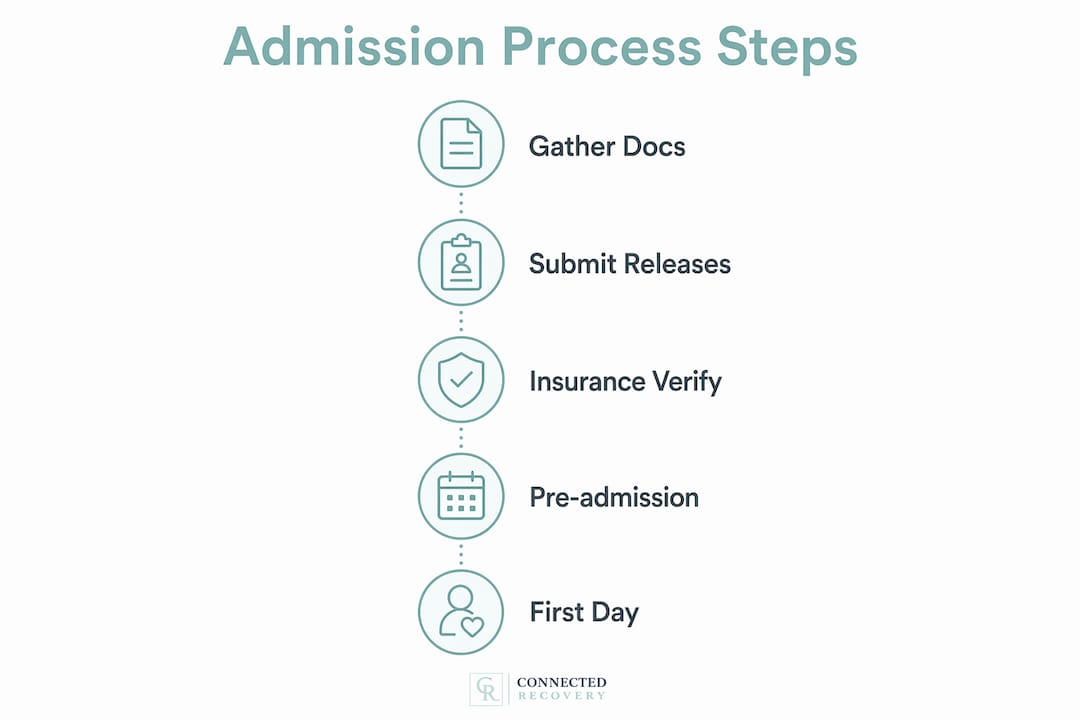
Most private rehab admissions begin with a 10–15 minute confidential phone consultation to assess eligibility and verify insurance, often completed the same business day. That initial call is where admissions staff confirm whether your plan is in-network, what your deductible looks like, and whether prior authorization is required.
When speaking with your insurer directly, ask these specific questions:
- Is this facility in-network or out-of-network?
- What is my deductible, and how much has been met?
- What is my coinsurance rate for residential treatment?
- Is prior authorization required, and how long does it take?
- Are there limits on the length of stay covered?
- Does my plan cover co-occurring mental health treatment?
- What is the appeals process if a claim is denied?
Federal Mental Health Parity rules under MHPAEA require insurers to provide comparable access for mental health and substance use treatment as they do for medical and surgical care. This matters because insurers sometimes apply stricter criteria to residential mental health stays than they would to a comparable medical admission. Knowing your rights under MHPAEA gives you leverage when pushing back on a denial or a coverage limit that seems arbitrary.
Insurance delays are common, but most are avoidable. If your insurer requests additional clinical documentation, ask the admissions team to submit a clinical summary directly. Facilities experienced in private rehab admissions handle this regularly and can often accelerate the authorization timeline.
What are the steps after insurance verification is complete?
Once insurance is confirmed, the admission process follows a predictable sequence. Knowing each step removes the uncertainty that makes this period feel stressful.
Private residential treatment includes a pre-admission assessment, detox determination, travel planning, room selection, and paperwork before the admission day itself. Here is how that sequence typically unfolds:
- Pre-admission clinical assessment. A clinician conducts a structured interview covering substance use history, mental health diagnoses, medications, and any medical concerns. This assessment determines the appropriate level of care.
- Medical detox determination. If withdrawal risk is present, the team will confirm whether medical detox is needed before or at the start of residential treatment. Some facilities, including Connected Recovery, provide medical detox on-site as part of an integrated care model.
- Travel and logistics planning. Residential stays typically last 30–60 days, and sometimes up to 90 days for more complex cases. Arranging time away from work, childcare, and other responsibilities before admission day prevents last-minute disruptions.
- Room selection and privacy review. Private facilities often offer private rooms and outdoor spaces that larger programs do not. Confirming your room type and any personal item policies ahead of time helps you pack appropriately.
- Paperwork and consent finalization. Financial agreements, treatment consent forms, and HIPAA authorizations are typically completed before or on arrival. Reviewing these documents in advance reduces the time spent on paperwork during an already emotionally charged day.
- Orientation on admission day. On admission day, expect a check-in, medical review, clinical assessment, facility orientation, and time to settle into your room. The first day is structured to prioritize your comfort and safety, not to overwhelm you.
Pro Tip: Pack light for your first day and bring only what the facility’s packing list recommends. Facilities often restrict certain items for safety reasons, and arriving with prohibited items creates unnecessary friction at check-in.
Here is a quick reference for what to expect at each stage:
| Stage | What happens | Who leads it |
|---|---|---|
| Pre-admission assessment | Clinical interview and level-of-care determination | Admissions clinician |
| Insurance verification | Coverage confirmation and authorization | Admissions and billing staff |
| Detox determination | Medical review of withdrawal risk | Medical director or physician |
| Paperwork completion | Consent forms, financial agreements, HIPAA | Admissions coordinator |
| Admission day orientation | Check-in, medical review, room assignment | Clinical and nursing staff |
What causes delays in private rehab admissions and how do you avoid them?
Most admission delays trace back to a small set of predictable problems. Recognizing them early gives you the ability to work around them before they stall the process.
- Incomplete documentation. Missing records or unsigned releases are the leading cause of delays. Facilities cannot proceed without a verified clinical history.
- Insurance authorization holds. Some plans require 24–72 hours for prior authorization. Submitting a complete clinical package on the first attempt reduces back-and-forth.
- Unclear admission type. Voluntary admission, where the person consents to treatment, leads to a smoother process and stronger treatment engagement than a legal involuntary hold. Most private residential programs strongly prefer voluntary admissions and will work with families to encourage that path.
- Aftercare not considered early enough. Facilities begin aftercare planning from the first week of treatment. Families who engage with this early avoid the scramble that happens when discharge approaches without a plan in place.
“The families who move through admissions fastest are the ones who treat it like a project with a checklist, not an emotional emergency with no roadmap. Preparation is the most compassionate thing you can do for someone who needs care right now.”
Pro Tip: Ask the admissions team for a written checklist of everything they need before your first call ends. Having it in writing prevents miscommunication and gives you a clear action list.
Clear communication with admissions staff is underrated. Ask direct questions. Confirm timelines in writing. If you receive conflicting information about coverage or documentation, escalate to a supervisor rather than waiting for clarity to arrive on its own.
Key Takeaways
Successful private residential treatment admissions depend on preparation, insurance knowledge, and clear communication with the admissions team at every stage.
| Point | Details |
|---|---|
| Gather documents first | Photo ID, insurance card, medication list, and signed releases speed up every step. |
| Know your insurance rights | MHPAEA requires comparable mental health coverage; use it to push back on denials. |
| Follow the post-verification sequence | Pre-admission assessment, detox review, travel planning, and paperwork all happen before arrival. |
| Voluntary admission matters | Patient consent leads to smoother intake and stronger engagement with treatment. |
| Plan aftercare from day one | Early aftercare planning prevents a gap in support when residential treatment ends. |
What I’ve learned about admissions that most guides won’t tell you
After working with families navigating this process, the pattern I see most often is this: people spend weeks researching facilities and almost no time preparing their documents. They find the right place, then lose days waiting for records they could have requested weeks earlier.
The insurance conversation is where families feel most lost, and understandably so. Coverage language is deliberately opaque. But MHPAEA is a real legal protection, and facilities with experienced admissions teams know how to use it. If a facility’s admissions staff cannot explain your coverage clearly or advocate with your insurer, that tells you something about how they will handle the rest of your care.
Private residential treatment offers something that larger programs genuinely cannot: the ability to know your care team by name within the first 48 hours. At a 12-bed facility, the clinical staff knows your history, your preferences, and your goals without consulting a chart every time. That level of familiarity changes the quality of treatment in ways that are hard to quantify but easy to feel.
My honest advice is to be proactive and specific when you call. Tell the admissions team exactly what you have, what you are missing, and what your timeline is. The more direct you are, the faster they can help you. Admissions staff are not gatekeepers. They are the people most motivated to get you through the door safely and quickly.
— Jim
Connected Recovery’s approach to residential admissions
Connected Recovery makes the admissions process as clear and direct as possible for individuals and families who are ready to take the next step.
The team at Connected Recovery begins with a confidential insurance benefit verification to confirm your coverage before any commitment is required. With a 12-bed capacity, every person who enters the program receives individualized attention from clinical and medical staff who specialize in both substance use and co-occurring mental health disorders. The residential treatment program includes 24/7 medical supervision, tailored treatment plans, and integrated aftercare planning from the first week. Contact the Connected Recovery admissions team today to get your questions answered and your documents reviewed without delay.
FAQ
What documents do I need for private rehab admissions?
You need a photo ID, insurance card, current medication list, psychiatric and medical records, and signed releases of information. Having these ready before your first call can reduce admission time from days to hours.
How long does insurance verification take for residential treatment?
Most facilities complete insurance verification during or immediately after a 10–15 minute confidential phone consultation, often the same business day. Prior authorization from your insurer may add 24–72 hours in some cases.
What is the typical length of stay in private residential treatment?
Private residential treatment stays typically last 30–60 days, with stays up to 90 days or longer for more complex clinical situations. Length of stay depends on your clinical needs and what your insurance plan covers.
Can my insurance deny coverage for residential treatment?
Yes, but federal MHPAEA rules require insurers to apply the same standards to mental health and substance use treatment as they do to medical care. If a claim is denied, you have the right to appeal, and an experienced admissions team can help you build that case.
What happens on the first day of admission?
Admission day includes check-in, a medical review, a clinical assessment, a facility orientation, and time to settle into your room. The process is structured to prioritize your comfort and safety from the first hour.
Recommended
DHCS Licensed · Joint Commission Accredited
If you or a loved one is struggling with substance use, our admissions team is available to verify your insurance benefits and help you begin recovery. All calls are confidential.