The Role of Peer Support in Recovery: A Practical Guide

Peer support is defined as a nonclinical, lived-experience-based process where people in recovery help each other sustain sobriety, rebuild hope, and stay connected to life beyond treatment. The role of peer support in recovery extends far beyond casual conversation. SAMHSA confirms that peer support prolongs recovery and prevents hospitalizations by bridging the gap between clinical care and everyday community life. That bridge matters because treatment ends, but recovery does not. When you leave a detox program or residential facility, peer connection is often what keeps the momentum going.
What evidence supports the effectiveness of peer support in recovery?
Peer support produces measurable gains in recovery outcomes, though its effects are stronger in some areas than others. A 2026 systematic review found consistent improvements in personal recovery outcomes like hope and empowerment, but inconsistent results for direct symptom reduction. That distinction matters. Peer support is not a substitute for medication or therapy. It is a complement that strengthens the personal dimensions of recovery that clinical care often cannot reach.
Program quality determines how much benefit you actually get. High-fidelity peer programs, meaning those that follow structured models with trained peer workers, consistently outperform loosely organized efforts. A Nature study from 2025 found statistically significant improvements in psychological well-being immediately after structured peer group sessions. Those gains faded at follow-up when participants had no ongoing contact. The lesson is direct: a single group or short intervention is not enough.
The research points to three consistent peer support benefits backed by evidence:
- Hope and empowerment: Peer support reliably improves how people feel about their own recovery potential, even when symptom levels stay the same.
- Treatment engagement: People connected to peer support stay in treatment longer and are less likely to drop out before completing a program.
- Relapse reduction: SAMHSA’s 2026 findings link peer support to lower relapse rates, particularly when peer workers maintain consistent contact over time.
Pro Tip: When evaluating a peer support group, ask whether it follows a recognized model like Intentional Peer Support. Structured programs with trained facilitators produce better outcomes than informal meetups.
How does peer support complement clinical addiction treatment?
Peer support fills the space that clinical care cannot occupy. Therapists and physicians address diagnosis, medication, and structured therapy. Peer workers address the lived experience of getting through a Tuesday when cravings hit and no appointment is scheduled. These two functions work together, not in competition.

BMC Psychiatry research from 2026 describes peer support as grounded in mutuality and person-centered empowerment, which is fundamentally different from the expert-over-patient model of clinical care. That shift in dynamic is not a weakness. It is the point. When someone who has been through addiction sits across from you, the conversation carries a credibility that no credential can replicate.
Peer support also expands access. JMIR Mental Health’s 2026 review found that online peer support reduces isolation and improves recovery outcomes, particularly for young people and those in underserved communities. This matters because geography and cost often limit access to clinical care. Online peer communities can reach people who would otherwise have no support at all.
Clear boundaries make this integration work. Peer support workers are not crisis counselors, and they are not therapists. BMC Psychiatry’s systemic integration study identifies role clarity as a prerequisite for effective peer-clinical partnerships. When peer workers know where their role ends, they can focus on what they do best without being pulled into situations that require clinical training.
The most effective models combine peer workers with clinical staff through shared learning. Peer workers attend team meetings, contribute observations about a person’s daily life, and receive supervision from clinical leads. This structure protects the peer worker and improves care for the person in recovery.
What are the core components of effective peer support?
The Intentional Peer Support model identifies four core tasks that define what peer support actually looks like in practice. These tasks are built around connection and shared learning, not advice-giving or problem-solving on behalf of someone else.
-
Building connection. The peer relationship starts with genuine mutual engagement. The goal is not to fix the other person but to establish trust through shared experience. This is the foundation everything else rests on.
-
Shared learning. Both people in a peer relationship grow. The helper therapy principle, documented in Nature research, shows that providing peer support improves the supporter’s own recovery and interpersonal skills. Helping someone else reinforces your own progress.
-
Advocacy and resource sharing. Peer workers help people navigate systems, find housing resources, connect to case management services, and understand their treatment options. This practical support reduces the friction that derails recovery.
-
Emotional support focused on individual needs. The Intentional Peer Support framework emphasizes that support must center on what the individual identifies as important, not what the peer worker assumes they need. This person-centered approach preserves dignity and builds genuine engagement.
Peer support also carries real challenges. Burnout is a documented risk, particularly when boundaries are unclear. Community Mental Health Journal research from practitioners in rural Australia and England found that boundary awareness is the single most important factor in keeping peer workers effective and sustainable over time.
How can you engage with peer support for your recovery?
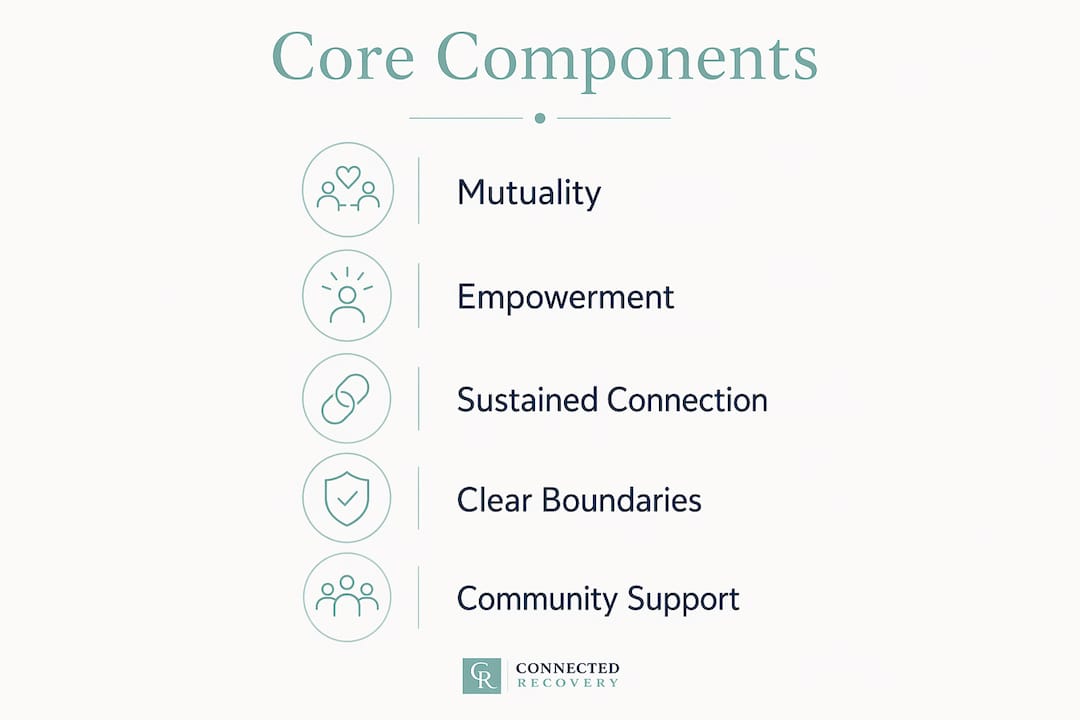
Finding the right peer support connection starts with knowing what type fits your situation. Structured peer support groups tied to treatment programs offer the most consistent outcomes. Informal community groups provide flexibility but vary widely in quality. Online communities, as JMIR Mental Health confirms, are a legitimate and effective option, especially if you live far from in-person resources or prefer anonymity early in recovery.
Once you find a group or peer connection, sustained engagement is what produces lasting benefit. The Nature booster study makes this clear: psychological well-being gains from peer support drop off without ongoing contact. Treat peer support like any other part of your recovery plan. Show up consistently, not just when things get hard.
Healthy engagement also requires boundaries on your end. Recovery is not a competition, and peer groups are not therapy sessions. If a group dynamic feels more draining than supportive, that is useful information. Not every group is the right fit, and finding one that works may take a few tries.
- Start during treatment, not after. Connecting with peer support while still in a residential treatment program builds the habit before you need it most.
- Use online options to fill gaps. When in-person meetings are not available, online peer communities provide real connection and accountability.
- Ask about booster sessions. When joining a structured group, find out if follow-up sessions are built into the program. If they are not, plan your own check-ins.
- Complement, do not replace. Peer support works best alongside clinical treatment, not instead of it. Keep your clinical appointments and use peer connection to reinforce what you learn there.
Pro Tip: If you are considering becoming a peer supporter yourself, look for programs that offer formal training and supervision. Structured preparation reduces burnout risk and makes you significantly more effective.
Key takeaways
Peer support works because it combines lived experience, mutual empowerment, and sustained connection in ways that clinical care alone cannot provide.
| Point | Details |
|---|---|
| Peer support is nonclinical | It builds hope and empowerment through shared experience, not symptom management. |
| High-fidelity programs outperform informal ones | Structured models with trained peer workers produce consistent, measurable recovery gains. |
| Sustained engagement is required | Single sessions improve well-being temporarily; booster programs maintain those gains long-term. |
| Role clarity protects everyone | Clear boundaries prevent peer worker burnout and keep the support relationship effective. |
| Peer support complements clinical care | It fills the daily, lived-experience gap that therapy and medication cannot reach. |
What I’ve learned about peer support that most articles get wrong
People often frame peer support as a feel-good add-on, something nice to have after the real work of treatment is done. That framing is wrong, and it costs people their recovery.
The most powerful thing peer support does is shift who holds the authority in a recovery conversation. When a clinician speaks, you hear expertise. When someone who has been through addiction speaks, you hear possibility. Those are different things. Possibility is what gets people through the hardest days.
I have also seen the boundary problem play out in real time. Peer supporters who take on too much, who become someone’s entire support system, burn out fast. The research from Community Mental Health Journal is not abstract. It describes something that happens regularly when peer workers are not given clear role definitions and supervision. The solution is not to care less. It is to build a structure that makes caring sustainable.
The other thing worth saying plainly: peer support is not a shortcut. People sometimes join a group hoping the community will do the work for them. It does not work that way. Peer support amplifies the effort you are already making. It does not replace it. Show up, stay consistent, and treat peer connection as seriously as you treat your clinical appointments.
— Jim
Peer support and clinical care at Connected Recovery
Connected Recovery’s approach to drug addiction treatment integrates the kind of structured, community-based support that research consistently links to better outcomes. With a 12-bed capacity in Van Nuys, CA, Connected Recovery provides the individualized attention that makes peer-informed care actually work, not just in theory but in daily practice.
From medical detox through aftercare planning, the programs at Connected Recovery are built around the understanding that clinical treatment and human connection work together. If you are ready to explore what that looks like for your situation, the team at Connected Recovery is available to walk you through your options.
FAQ
What is the role of peer support in recovery?
Peer support provides nonclinical, lived-experience-based connection that extends recovery beyond clinical treatment. SAMHSA confirms it reduces relapse likelihood and improves long-term recovery outcomes by bridging clinical and community support.
How does peer support differ from therapy?
Peer support is not clinical care. It is based on mutual experience and empowerment rather than diagnosis or treatment, and it works best as a complement to therapy, not a replacement.
How long does peer support need to continue to be effective?
Sustained engagement produces lasting benefit. Research published in Nature shows that psychological well-being gains from peer group sessions fade without ongoing booster contact, making long-term participation the standard to aim for.
Can peer support help with co-occurring mental health disorders?
Peer support benefits people managing both addiction and mental health conditions by improving hope, reducing isolation, and reinforcing engagement with clinical care. Integrated treatment programs that address dual diagnosis often incorporate peer support as a core component.
What makes a peer support program effective?
High-fidelity programs with trained peer workers, clear role boundaries, and ongoing supervision consistently outperform informal arrangements. The Intentional Peer Support model is one recognized framework that structures these elements into a replicable approach.
Recommended
DHCS Licensed · Joint Commission Accredited
If you or a loved one is struggling with substance use, our admissions team is available to verify your insurance benefits and help you begin recovery. All calls are confidential.