
Detox From Pain Medication Without Losing Pain Control

The safest way to stop opioids is medically supervised detox paired with an individualized, multimodal pain plan built before you stop, not after. Never quit abruptly on your own. If you’re in crisis or having thoughts of self-harm, contact 988 or emergency services now. If you’re taking prescribed opioids, talk to your prescriber before changing your dose. The single biggest predictor of relapse isn’t willpower; it’s what happens to your pain in the weeks after detox, and that’s exactly why an aftercare plan matters as much as the detox itself.
Key Takeaways
Controlling pain during and after opioid detox, through medical supervision, non-opioid medications, and a written aftercare plan, is what actually prevents relapse.
| Point | Details |
|---|---|
| Pain predicts relapse | Higher pain during detox correlates with more opioid use days in the following month. |
| Hyperalgesia is temporary | Opioid-induced hyperalgesia peaks early in abstinence and typically improves over months. |
| Adjunct meds treat specific symptoms | Clonidine, loperamide, promethazine, NSAIDs, and lofexidine each target a distinct withdrawal symptom. |
| Aftercare must be written and early | Plans made at admission, not discharge, improve follow-through and cut dropout. |
| Boutique supervised care adjusts pain plans daily | Connected Recovery’s 12-bed model pairs 24/7 monitoring with same-day changes to pain and therapy plans. |
Table of Contents
- Why Pain Management Matters During Opioid Detox
- What Withdrawal Does to Your Pain and Sleep
- How Medically Supervised Detox Controls Pain Safely
- Non-Opioid Options That Actually Control Pain
- Building an Aftercare Plan That Prevents Relapse
- Connected Recovery’s Clinical Approach in Practice
- How to Talk to Your Clinician About Pain and Past Opioid Use
- Get a Pain-Focused Detox Assessment
- Frequently Asked Questions
- Sources
Why Pain Management Matters During Opioid Detox
Pain that spikes during detox doesn’t just hurt. It drives relapse. One study found that higher pain severity during and immediately after detoxification correlated with more days of opioid use in the following month, a statistically significant link that shows up again and again in withdrawal research.
Part of the problem has a name: opioid-induced hyperalgesia. Chronic opioid use can actually lower your pain threshold over time, so your body becomes more sensitive to pain, not less. It tends to peak in the early weeks after your last dose and often eases over the following months as your nervous system resets. That’s a medical phenomenon, not a character flaw, and treating it as a symptom to manage, rather than a consequence to endure, is what separates a coordinated detox from a rough one.
What Withdrawal Does to Your Pain and Sleep
Withdrawal doesn’t stay in its lane. Muscle aches, insomnia, restless legs, and autonomic surges like sweating or a racing heart all overlap with chronic pain symptoms, and when they stack on top of an existing condition, patients often can’t tell where withdrawal ends and their baseline pain begins.
- Myalgia and joint pain that mimic or worsen existing chronic pain
- Insomnia and restless legs that lower your pain tolerance the next day
- Autonomic symptoms (sweating, elevated heart rate) that heighten anxiety
- Hyperalgesia-driven cravings that feel like “I need relief now”
- Anxiety and depression that amplify how intensely pain registers
Pro Tip: Keep a simple daily log of pain level, sleep hours, and mood during the first two weeks. Clinicians use that pattern, not a single bad day, to adjust your plan.
Withholding adequate pain relief from someone with a substance use history is increasingly seen as substandard care. The goal isn’t to tough it out. It’s to treat every symptom on that list with a specific, non-opioid tool.

How Medically Supervised Detox Controls Pain Safely
A supervised setting means round-the-clock monitoring, symptom-specific medication, and clear criteria for escalating care if withdrawal turns severe. Detox handled this way looks different from detox handled alone at home, mainly because someone is watching for the warning signs you’d miss.
- Autonomic symptoms get managed with clonidine, which blunts the sweating, elevated heart rate, and anxiety spikes common in early withdrawal.
- Gastrointestinal distress responds to loperamide for diarrhea and promethazine for nausea, two of the most disruptive withdrawal symptoms.
- Muscle and joint pain is treated with NSAIDs like ibuprofen rather than a repeat opioid prescription.
- Broader withdrawal symptoms can be managed with lofexidine, an FDA-approved non-opioid medication cleared for up to 14 days of use.
- Longer-term cravings and physiologic dependence sometimes call for medication-assisted treatment, buprenorphine or methadone, rather than a short symptomatic taper. That decision depends on your history, not a fixed protocol.
The overdose risk after detox deserves its own warning. Your tolerance drops fast once opioids clear your system, so a relapse dose that once felt normal can now be lethal. That single fact is the reason a documented aftercare plan isn’t optional.
Non-Opioid Options That Actually Control Pain
Pain relief after opioids comes from stacking several moderate tools, not finding one replacement. Clinicians typically build a plan across two tracks and adjust based on what’s working within the first week or two.
Pharmacologic options include NSAIDs and acetaminophen for everyday pain, adjuvant agents like gabapentin or duloxetine for nerve-related pain, and topical treatments (lidocaine patches, capsaicin cream) for localized flare-ups. Each carries its own safety profile, so dosing gets individualized rather than templated.
Nonpharmacologic tools carry real weight here too:
- Physical therapy and graded exercise to rebuild tolerance for movement
- Cognitive behavioral therapy focused specifically on pain coping, not just mood
- Sleep optimization, since poor sleep intensifies next-day pain perception
- TENS units, acupuncture, and alternating heat or cold for localized relief
- Pacing techniques that prevent the boom-and-bust cycle of overdoing a good day
Pro Tip: Ask your care team to set one measurable pain goal each week, like walking ten more minutes or sleeping six hours straight, instead of chasing a vague “feel better” target.
A prospective study on elective opioid detoxification found substantial average reductions in pain scores and improved quality of life among patients who were tolerant to prescription opioids, evidence that stopping opioids doesn’t doom you to worse pain long term.
Building an Aftercare Plan That Prevents Relapse
Detox without a follow-up plan is a setup for the exact relapse pattern the research keeps flagging. SAMHSA guidance stresses individualized withdrawal care paired with documented post-withdrawal treatment, and that documentation step is what most people skip.
- Write the plan before detox ends, not after you leave. Starting aftercare planning at admission improves follow-through and cuts dropout.
- Line up the right handoff: outpatient or residential treatment, MAT maintenance, a pain-specialist referral, ongoing therapy, or peer support, depending on what your detox team flags as your biggest risk.
- Document your opioid history for every new provider. Any future prescriber needs to know your prior use before writing anything, since that single conversation prevents a well-meaning script from restarting the cycle.
Reviewing an opioid detox timeline beforehand helps you and your family know which week to expect which symptom, so the plan doesn’t feel reactive.
Connected Recovery’s Clinical Approach in Practice
Connected Recovery runs a 12-bed boutique facility in Van Nuys with 24/7 medical supervision, built so pain plans get adjusted daily instead of at a weekly check-in. Dual diagnosis care means anxiety or depression driving your pain gets treated alongside the detox itself.
How to Talk to Your Clinician About Pain and Past Opioid Use
Describe your pain in plain terms: where it is, how long it’s lasted, and what medications you’ve taken, including doses. Ask directly about supervision level, which adjunct medications they use, whether MAT fits your case, and when aftercare gets scheduled. If you’re dealing with uncontrolled suicidal thoughts or a serious medical condition alongside withdrawal, that’s a sign you need inpatient care, not a home taper.
Get a Pain-Focused Detox Assessment
Connected Recovery is built for exactly the gap this article describes: a place where your pain plan and your detox happen under the same 24/7 clinical eye, instead of getting handed off between a detox clinic and a separate pain specialist who never talk to each other. With only 12 beds, staff can adjust your NSAID dosing, sleep protocol, or therapy schedule the same day something isn’t working, not at next week’s appointment.

The program lineup covers what this article walked through: medically supervised detox with non-opioid symptom management, residential treatment for those who need more time to stabilize, dual diagnosis care for co-occurring anxiety or depression, and aftercare planning that starts on day one instead of on discharge day. For patients weighing buprenorphine or methadone as part of that plan, resources like Diamond Wellness’s overview of medication-assisted therapy explain how maintenance options fit into longer recovery. If you’re ready to find out what a supervised pain-and-detox plan looks like for your specific history, reach out to Connected Recovery’s admissions team for an assessment and insurance check.
Frequently Asked Questions
Is it safe to detox from pain medication at home?
Home detox carries real risk, especially if you’re on high doses or have other medical conditions. Medically supervised detox catches complications early and treats withdrawal symptoms with the adjunct medications listed above, options you can’t access without clinical oversight.
Will my chronic pain get worse after I stop opioids?
It may spike temporarily due to opioid-induced hyperalgesia, but that heightened sensitivity typically eases over the following months. Many patients report improved pain scores and quality of life once they’re off opioids and on a coordinated non-opioid plan.
What’s the difference between detox and pain management?
Detox addresses physical dependence and withdrawal. Pain management is the ongoing plan, medications, physical therapy, behavioral therapy, that keeps your pain controlled once withdrawal ends. You need both, and they work best when the same team coordinates them.
How long does opioid-induced hyperalgesia last?
It often peaks in the first few weeks of abstinence and gradually improves over months as your nervous system readjusts, though the timeline varies by individual and by how long opioids were used.
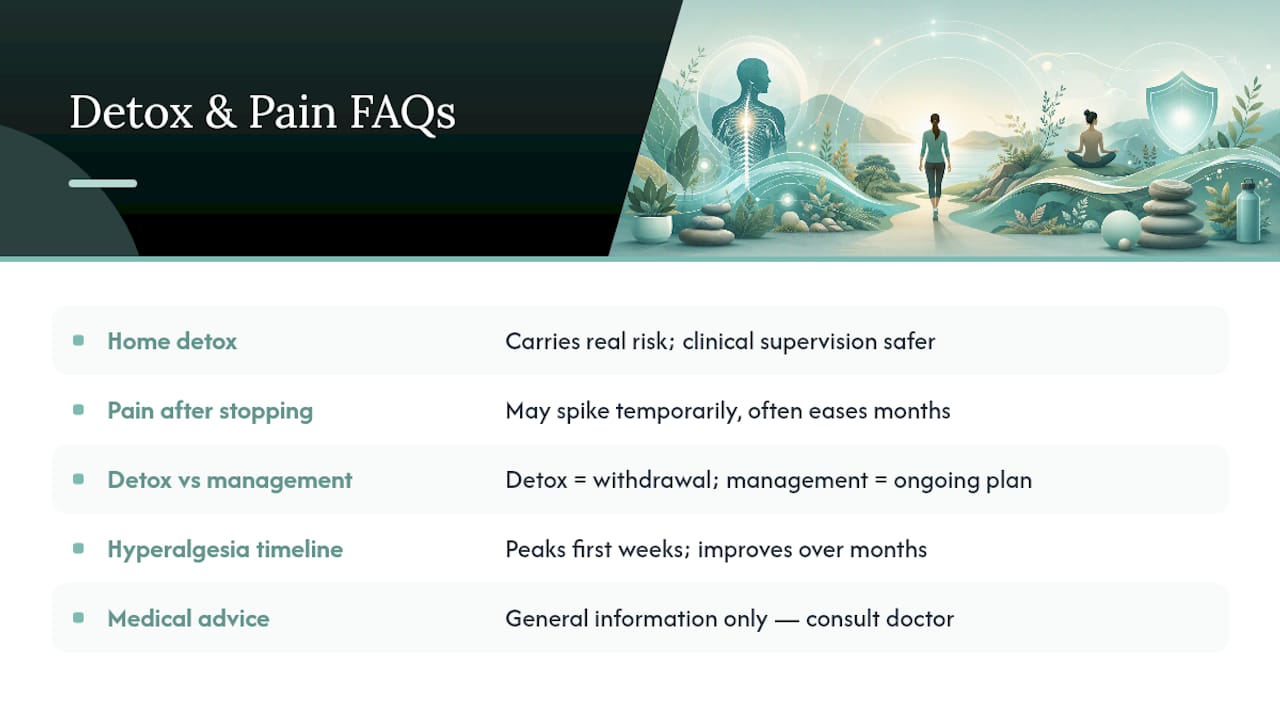
This article is general information, not a substitute for advice from a qualified doctor. Consult a qualified healthcare professional about your own circumstances before acting on anything here.
Sources
- Opioid Withdrawal - StatPearls - NCBI Bookshelf
- Study linking pain during detox to subsequent opioid use
- Impact of Prescription Opioid Detoxification on Quality of Life and Pain Levels (MDPI)
- SAMHSA (U.S. Department of Health and Human Services)
Recommended
DHCS Licensed · Joint Commission Accredited
If you or a loved one is struggling with substance use, our admissions team is available to verify your insurance benefits and help you begin recovery. All calls are confidential.