
Steps to Emergency Rehab Admission: Act Fast, Get Help

What are the immediate steps to take for emergency rehab admission?
Getting into emergency rehab starts with one action: call a 24/7 admissions line right now. You do not need a referral, a court order, or to have hit any particular low point. Many facilities can place you the same day, sometimes within hours of that first call.
Here is what to do immediately:
- Call a 24/7 admissions hotline or intake coordinator. Most reputable centers staff their phones around the clock. State that you need urgent placement.
- Complete a confidential phone assessment. The intake coordinator will ask about your substance use history, current symptoms, and any medical conditions. Answer honestly. This call determines your level of care and speeds up placement.
- Prepare your essential documents. Photo ID, insurance card, a list of current medications, and any relevant medical records. Having these ready prevents delays at intake.
- Confirm your eligibility for urgent admission. Medical instability, active withdrawal, or overdose risk typically qualify you for emergency placement. The admissions team will walk you through the criteria.
- Arrange transportation. If you cannot drive or do not have someone to take you, tell the facility. Many centers offer transport services or can coordinate a safe pickup.
- Expect same-day or next-day placement. Emergency rehab focuses on immediate safety and medical stabilization, often with same-day admission, unlike standard programs that may involve waitlists.
Pro Tip: Call multiple facilities at once if your first choice has no immediate openings. Availability changes fast, and applying to several centers at the same time dramatically improves your chances of getting in today.

How does the emergency rehab process work, step by step?
The process moves faster than most people expect. Here is the sequence from first call to first night in treatment.
-
Initial phone contact with an admissions navigator. Admissions navigators are available 24/7 and trained to handle urgent calls without judgment. They gather preliminary information about your substance use, withdrawal symptoms, and immediate safety needs to determine the right level of care.
-
Rapid clinical assessment. A licensed clinician evaluates your situation, either by phone or upon arrival. This covers the type and duration of substance use, severity of withdrawal, co-occurring mental health conditions, and overall physical health. The goal is to match you to the right level of care quickly.
-
Insurance verification and financial discussion. Staff verify your coverage and explain what your plan covers, including detox, inpatient, or outpatient services. If insurance is limited or unavailable, most centers discuss payment plans or sliding-scale fees. Medicare covers medically necessary inpatient rehabilitation when eligibility criteria are met, including transfer from an acute care hospital or admission within 60 days of hospital discharge.
-
Formal admission and intake. Once finances are sorted, you travel to the facility. Upon arrival, a licensed professional conducts a physical exam and psychiatric assessment. Paperwork is handled efficiently so you move into the therapeutic environment with minimal delay.
-
Transportation to the facility. If you are in withdrawal or crisis, do not attempt to drive. Many centers arrange pickup directly. Coordinating transport promptly minimizes the gap between decision and treatment.
-
The first 24–48 hours: stabilization and planning. This phase is critical. If you need medical detox, you receive supervised withdrawal management with medications to reduce discomfort and prevent dangerous complications. Concurrently, your clinical team begins building your personalized treatment plan, including therapy sessions and group support.
What documents do you need to prepare for rehab admission?
Gathering the right paperwork before you arrive prevents delays at intake and speeds up insurance verification. Having these items ready can be the difference between same-day admission and a frustrating wait.
- Government-issued photo ID. A driver’s license or passport works. This is non-negotiable for intake.
- Insurance card and member ID number. Bring the physical card if possible. Staff need your group number and provider contact to verify benefits quickly. Understanding how insurance documentation affects the intake process can help you prepare.
- Current medication list. Include every medication, the dosage, and the prescribing doctor. This is critical for safe detox management.
- Medical and psychiatric records. A brief summary is enough. Full records are helpful but not required to start the process.
- Contact information for your healthcare providers. Your primary care doctor or therapist may need to be reached during admission.
- Social Security number and proof of address. A utility bill or rental agreement typically suffices.
Pro Tip: Take a photo of every document with your phone before you leave home. If originals get lost in transit, you still have everything the admissions team needs to proceed.
What levels of care are available during emergency rehab admissions?
Not every person entering emergency rehab needs the same level of treatment. The clinical assessment determines where you start, and you can move between levels as your condition changes.
- Medically supervised detoxification. The first step when withdrawal symptoms are present or expected. Medical staff monitor vitals, manage symptoms, and administer medications to prevent dangerous complications. Detox typically lasts several days.
- Residential inpatient treatment. Intensive, 24-hour therapeutic care following detox or for severe addiction without acute withdrawal. You live at the facility and participate in structured therapy, group sessions, and medical oversight.
- Partial hospitalization programs (PHP). A step down from inpatient. You attend treatment for several hours daily but return home or to a sober living environment each night.
- Intensive outpatient programs (IOP). Less restrictive, suited for people with stable living situations and moderate addiction severity. Typically involves multiple therapy sessions per week.
| Level of care | Setting | Intensity | Typical duration |
|---|---|---|---|
| Medical detox | Inpatient facility | Highest | typically several days |
| Residential inpatient | 24-hour facility | High | varying multi-week duration |
| Partial hospitalization | Day program | Moderate-high | varies over several weeks |
| Intensive outpatient | Outpatient clinic | Moderate | multi-week program |
Emergency admission eligibility centers on safety and medical need. Active withdrawal risk, overdose history, or a co-occurring psychiatric crisis typically qualifies someone for immediate placement at the detox or inpatient level. Consulting an independent healthcare professional alongside the admissions team helps confirm that the recommended level of care matches your actual clinical needs, since intake coordinators sometimes serve dual roles as admissions representatives.
How do tailored treatment plans improve outcomes in emergency admissions?
Generic treatment does not work as well as care built around your specific situation. The clinical evidence points clearly toward personalized, integrated approaches producing better long-term outcomes.
Tailored treatment plans that address both substance use and co-occurring mental health disorders, combined with 24/7 medical supervision, improve recovery outcomes and reduce relapse risk. Long-term recovery planning that begins at the emergency admission stage, rather than being added later, gives patients a clearer path forward from day one.
Several elements define genuinely individualized care:
- 24/7 medical supervision during the critical withdrawal and stabilization window, ensuring complications are caught and managed immediately.
- Integrated mental health treatment for co-occurring disorders like depression, anxiety, or PTSD, rather than treating addiction in isolation. Cognitive behavioral therapy is one of the evidence-based approaches commonly woven into these integrated plans.
- Medication management tailored to your specific substances and withdrawal profile.
- Aftercare and long-term recovery planning that starts during admission, covering relapse prevention, outpatient follow-up, and family involvement.
Family involvement during and after admission also strengthens outcomes. Identifying family members and caregivers before discharge and including them in the care plan improves the transition back to daily life.
Connected Recovery: boutique emergency rehab with personalized care
When you need emergency treatment and want more than a bed in a crowded facility, Connected Recovery offers a different experience.
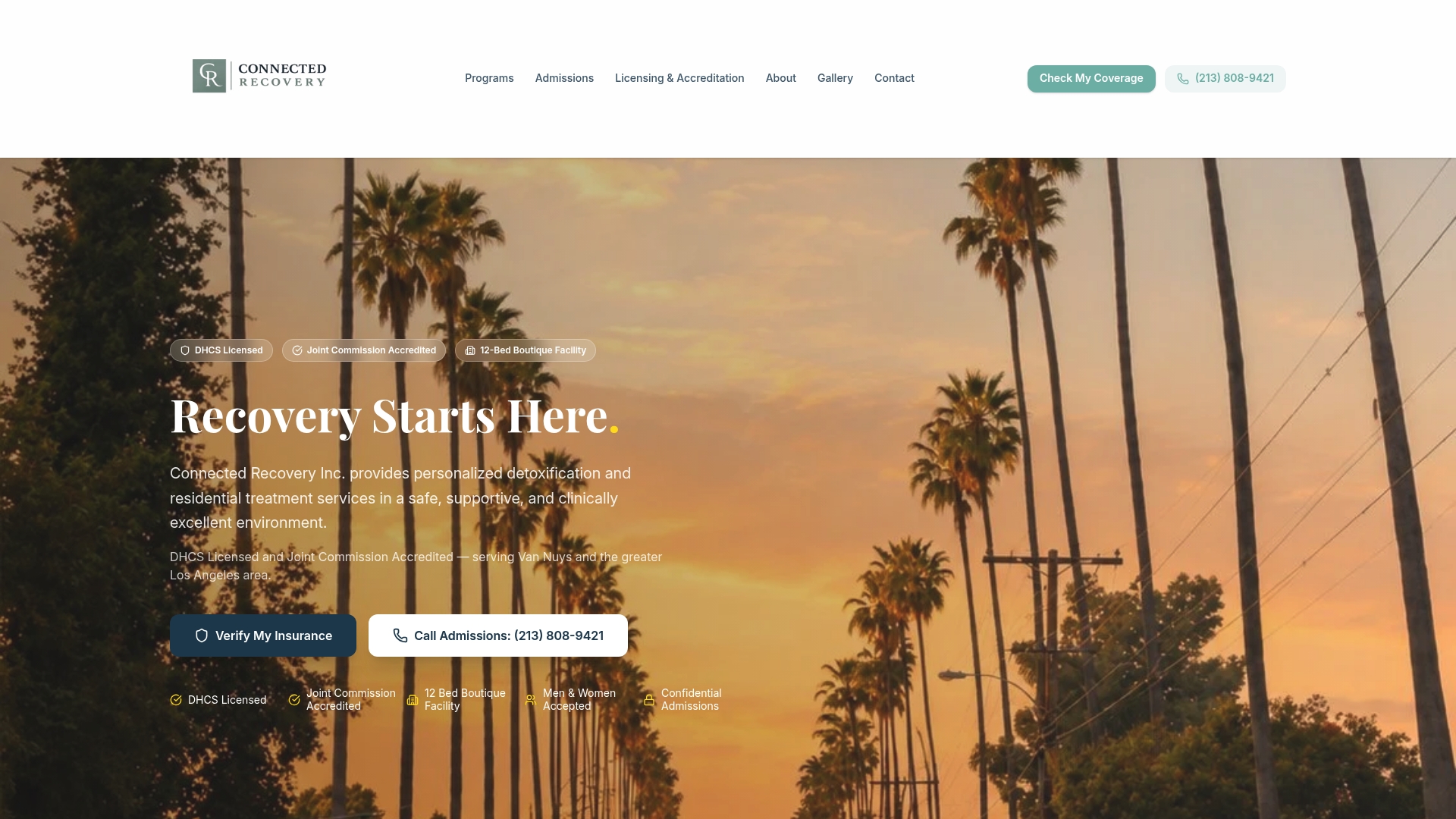
Connected Recovery is a boutique residential facility in Van Nuys, CA, built specifically for people who need immediate, attentive care during detox and residential treatment. With only 12 beds, every person receives the kind of individualized attention that larger centers structurally cannot provide. The medical detox program runs with 24/7 physician and nursing oversight, so the critical first days of withdrawal are managed safely and with genuine clinical focus. For those who need longer-term structure, residential treatment continues that same personalized approach through integrated mental health care, medication management, and long-term recovery planning. Confidential intake is available now. Reach the admissions team directly at connectedrecoverycenter.com.
Key Takeaways
Emergency rehab admission moves fastest when you call a 24/7 admissions line immediately, arrive with your documents ready, and enter a facility that matches your clinical level of care from day one.
| Point | Details |
|---|---|
| Call first, ask questions second | A 24/7 admissions hotline starts the process; same-day placement is possible at many facilities. |
| Documents speed up intake | Photo ID, insurance card, medication list, and medical records prevent delays at admission. |
| Level of care is clinically determined | Detox, inpatient, PHP, and IOP each serve different severity levels; the assessment decides where you start. |
| Integrated care improves outcomes | Addressing co-occurring mental health disorders alongside addiction reduces relapse risk. |
| Connected Recovery offers boutique emergency care | A 12-bed facility in Van Nuys, CA with 24/7 medical supervision, personalized plans, and confidential intake. |
Recommended
DHCS Licensed · Joint Commission Accredited
If you or a loved one is struggling with substance use, our admissions team is available to verify your insurance benefits and help you begin recovery. All calls are confidential.