
What Is the Detox Stabilization Phase?

The detox stabilization phase is defined as the medically supervised period when withdrawal symptoms reach their peak and clinical teams work to restore physical and mental balance before addiction treatment begins. This phase is not addiction treatment itself. It is a medical reset, managed through 24/7 medical supervision, continuous vital sign monitoring, and evidence-based medication protocols. Understanding what is detox stabilization phase means recognizing it as the foundation on which all lasting recovery is built. Without it, the body cannot safely engage in the behavioral therapies that follow. Connected Recovery structures this phase around personalized care, treating each person’s withdrawal as the unique medical event it is.
What is the detox stabilization phase and why does it matter?
The detox stabilization phase is the period during detoxification when the body clears substances and medical staff intervene to prevent dangerous complications. The goal is physical and mental balance, not the resolution of addiction itself. Medical detox is primarily a physically restorative process that enables patients to safely engage in the mental and behavioral therapies required for lasting recovery.
This distinction matters enormously. People who enter stabilization expecting to feel “cured” often leave prematurely, which dramatically increases relapse risk. The stabilization phase is preparation. Think of it as clearing the ground before building a house. Nothing lasting gets built on an unstable foundation.
The phase is governed by recognized clinical standards and medication protocols developed specifically for withdrawal management. These protocols exist because withdrawal from substances like alcohol or opioids carries genuine medical risk, including seizures and cardiac events. Stabilization addresses those risks directly and systematically.
What happens during the detox stabilization process?
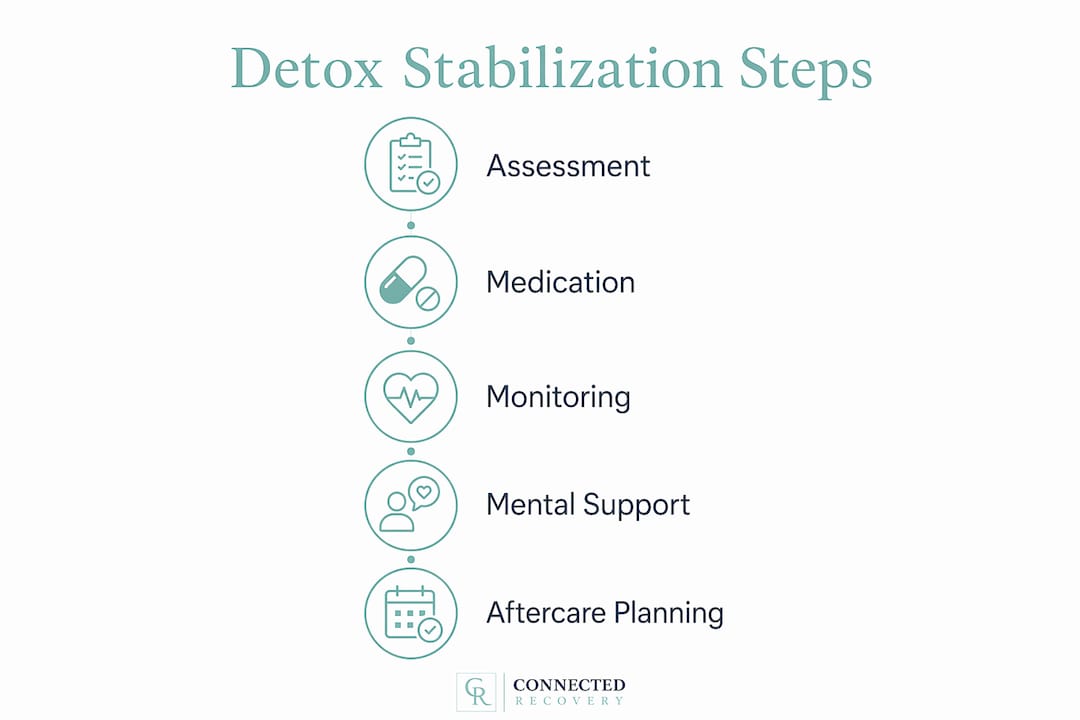
The detox stabilization process centers on continuous monitoring and targeted medical intervention. Clinical staff track vital signs around the clock, including heart rate, blood pressure, and temperature. Medication-assisted treatment is the primary clinical tool, with specific medications matched to the substance involved.

For opioid withdrawal, buprenorphine or methadone are the standard medications used to reduce cravings and ease physical symptoms. For alcohol withdrawal, benzodiazepine tapers are the established protocol, reducing the risk of seizures and delirium tremens. Naltrexone is used in some cases to block opioid receptors and reduce relapse risk after stabilization.
The detox phase typically lasts about five days, though duration varies based on the substance used, the length of use, and individual health factors. Some patients with complex histories require extended stays of 30–60 days when stabilization is combined with early residential treatment.
Beyond medication, the stabilization process includes:
- Hydration and nutrition support to restore physical health depleted by substance use
- Emotional support and reassurance from nursing and counseling staff during distressing withdrawal periods
- Sleep monitoring to address insomnia, which is common across most withdrawal syndromes
- Regular clinical reassessment to adjust medication dosing as symptoms evolve
- Safety checks to catch early signs of complications before they escalate
Pro Tip: Ask your care team to explain each medication they prescribe during stabilization. Knowing what buprenorphine or a benzodiazepine taper does reduces anxiety and helps you cooperate with the protocol more effectively.
How does medical supervision in stabilization improve safety?
Medical supervision during stabilization is the single factor that separates safe detox from life-threatening withdrawal. Unsupervised withdrawal from alcohol or benzodiazepines carries a real risk of seizures. Supervised detox eliminates that risk through proactive intervention.
Clinical teams use validated tools to measure withdrawal severity objectively. The CIWA-Ar (Clinical Institute Withdrawal Assessment for Alcohol) is the standard instrument for alcohol withdrawal. CIWA-Ar scores guide medication dosing directly, meaning treatment adjusts based on measured severity rather than patient-reported symptoms alone. This removes guesswork from a process where guesswork is dangerous.
Autonomic stability monitoring goes deeper than symptom management. Heart rate and blood pressure are tracked continuously because dangerous withdrawal events often appear first in vital signs before a patient feels them. This level of monitoring is only possible in a medically supervised setting.
| Monitoring Method | What It Measures | Why It Matters |
|---|---|---|
| CIWA-Ar assessment | Alcohol withdrawal severity | Guides precise medication dosing |
| Vital sign tracking | Heart rate, blood pressure, temperature | Detects dangerous autonomic instability early |
| Neurological checks | Alertness, orientation, reflexes | Identifies seizure risk or delirium onset |
| Medication response review | Symptom change after dosing | Allows real-time protocol adjustment |
Pro Tip: If you are supporting someone through detox, ask the clinical team what their CIWA-Ar protocol looks like. A facility that uses validated scoring tools is operating at a higher standard of care than one relying on observation alone.
What mental health support is integrated during stabilization?
Mental health support during stabilization is not optional. It is clinically necessary. Many people entering detox carry co-occurring conditions such as depression, anxiety, or post-traumatic stress disorder. These conditions do not pause during withdrawal. They often intensify.
Effective detox programs integrate psychological care from day one, offering therapies like cognitive behavioral therapy and motivational enhancement alongside withdrawal management. Psychiatric medications for depression, anxiety, and mood stabilization are monitored and adjusted throughout the stabilization period. This is not about rushing therapy. It is about preventing psychiatric symptoms from derailing the physical stabilization process.
The benefits of an integrated dual diagnosis approach during stabilization include:
- Reduced relapse risk during and immediately after detox, when psychiatric symptoms are most acute
- Better medication compliance because patients whose anxiety is managed are more willing to follow clinical protocols
- Earlier identification of serious psychiatric conditions that require specialist intervention
- Stronger readiness for behavioral therapy once stabilization is complete
- Improved patient trust in the treatment team, which increases engagement in subsequent recovery steps
Stabilization is not addiction treatment but medical preparation for it. Patients with dual diagnosis who receive concurrent mental health and substance use stabilization show improved outcomes compared to those who receive only physical withdrawal management. The brain needs space to clear substances before deep psychological work begins. Minimal but targeted psychological support during this phase prepares patients for that deeper work without overwhelming them.
What comes after the stabilization phase in substance detox?
Stabilization ends. What happens next determines whether it was worth it. Patients who lack a concrete next step after detox are significantly more likely to relapse shortly after the stabilization phase ends. Transition planning is the bridge between physical recovery and lasting sobriety.
The post-stabilization path typically follows this sequence:
- Discharge planning begins during stabilization. Clinical case managers identify appropriate next steps before the patient leaves the detox setting. Waiting until the last day is too late.
- Assessment for level of care. Clinicians determine whether the patient needs inpatient residential treatment, partial hospitalization, intensive outpatient care, or standard outpatient therapy based on severity and support systems.
- Placement in a structured program. Residential treatment is the most common next step for patients completing medical detox, providing 24-hour structure and therapeutic programming.
- Medication continuation. Medications started during stabilization, such as buprenorphine or naltrexone, often continue into the next phase of treatment to reduce relapse risk.
- Aftercare planning. Long-term recovery requires a plan that extends beyond residential treatment, including outpatient therapy, peer support, and community resources.
Detox success critically depends on effective discharge planning that establishes concrete aftercare and rehab placements. A patient who completes stabilization without a confirmed next step is in a vulnerable position. The clinical team’s job is to make sure that gap never exists.
Key Takeaways
The detox stabilization phase is a medically supervised period of withdrawal management that restores physical and mental balance, and it is the required foundation for all effective addiction treatment that follows.
| Point | Details |
|---|---|
| Stabilization is medical, not curative | It clears substances and prevents complications; it does not treat addiction itself. |
| Medication protocols are substance-specific | Buprenorphine and methadone address opioids; benzodiazepine tapers manage alcohol withdrawal safely. |
| CIWA-Ar guides clinical decisions | Validated scoring tools replace guesswork and allow precise, real-time medication adjustments. |
| Mental health support starts on day one | Co-occurring conditions must be managed during stabilization to prevent psychiatric crises and relapse. |
| Transition planning cannot wait | Patients without a confirmed next step after detox face a significantly higher relapse risk. |
Why most people misunderstand what stabilization actually does
People enter detox expecting to feel better fast. That expectation is understandable and almost always wrong. Stabilization is the hardest part of the recovery process physically, and it is supposed to be. The body is doing serious work clearing substances that have altered its chemistry, sometimes for years.
What I have seen repeatedly is that patients who understand stabilization as a medical phase, not a cure, tolerate it far better. They stop measuring success by how good they feel and start measuring it by whether they are safe, supervised, and moving toward the next step. That shift in perspective changes everything.
The detail most people overlook is autonomic monitoring. Patients focus on nausea or cravings, which are miserable but rarely fatal. The clinical team is watching heart rate and blood pressure because those are the numbers that signal a seizure or cardiac event is coming. That monitoring is invisible to the patient but it is the most important thing happening in the room.
My strongest advice: before you enter detox, ask the facility what their discharge planning process looks like. A facility that cannot answer that question clearly is not ready to serve you well. Stabilization without a confirmed next step is an incomplete intervention. You deserve the full one.
— Jim
Connected Recovery’s approach to medical detox and stabilization
Connected Recovery provides medical detox with 24/7 supervision in a 12-bed boutique setting designed for individualized care. Every patient receives a tailored stabilization plan that addresses both physical withdrawal and co-occurring mental health conditions from the first day of treatment.
The facility’s integrated model means psychiatric support, medication management, and withdrawal monitoring happen in the same place, under the same clinical team. After stabilization, Connected Recovery’s addiction treatment programs provide a clear, structured path into residential or outpatient care. You do not have to figure out the next step alone. The team builds that plan with you before you leave detox.
FAQ
What is the stabilization phase in detox?
The stabilization phase is the medically supervised period when withdrawal symptoms peak and clinical teams use medication and monitoring to restore physical and mental balance. It is the first and most medically intensive stage of the detox process.
How long does the detox stabilization phase last?
The detox phase typically lasts about five days, though duration varies based on the substance, length of use, and individual health factors. Some cases extend significantly longer when combined with early residential treatment.
What medications are used during stabilization?
Common medications include buprenorphine and methadone for opioid withdrawal, benzodiazepine tapers for alcohol withdrawal, and naltrexone to reduce relapse risk. Medication choice depends on the substance involved and the patient’s medical history.
Is detox stabilization the same as addiction treatment?
Stabilization is medical preparation for addiction treatment, not treatment itself. It clears substances from the body and prevents dangerous complications, but the behavioral and psychological work of recovery begins in the programs that follow.
What happens if you skip the stabilization phase?
Skipping supervised stabilization exposes patients to serious medical risks, including seizures and cardiac events during withdrawal. Patients who attempt unsupervised withdrawal also face a higher relapse rate because physical symptoms are unmanaged and overwhelming.
Recommended
DHCS Licensed · Joint Commission Accredited
If you or a loved one is struggling with substance use, our admissions team is available to verify your insurance benefits and help you begin recovery. All calls are confidential.