
6–72 Hours: Alcohol Withdrawal Timeline, Hourly Red Flags

Alcohol withdrawal usually starts within 6 to 12 hours of the last drink, peaks between 24 and 72 hours, and mostly resolves within 5 to 7 days, though some physical symptoms can drag on for two weeks. Seizures cluster in the 6 to 48 hour window, and delirium tremens tends to show up between 48 and 72 hours. Anyone with a history of seizures, DTs, or heavy long-term drinking should treat this as a medical event, not a willpower test.
TL;DR:
- People with a history of seizures, delirium tremens, or heavy long-term drinking should seek supervised medical detox rather than attempting home withdrawal.
- The highest seizure risk occurs between 12 and 48 hours after the last drink, with peak delirium tremens risk between 48 and 72 hours, requiring close monitoring.
- Severity of withdrawal can be predicted by drinking history, prior withdrawal episodes, medical conditions, and concurrent drug use, guiding the level of care needed.
- Benzodiazepines are the primary treatment during detox, with strict tapering and supportive care to prevent complications like seizures and delirium tremens.
- Post-acute withdrawal symptoms, including insomnia, anxiety, and cravings, can last weeks after detox and benefit from structured follow-up treatment.
Table of Contents
- Alcohol Withdrawal Stages: A Timeline Overview
- Day-by-Day Withdrawal: What to Watch For and When to Act
- What Makes Withdrawal Longer or More Severe for Some People
- How Doctors Measure Withdrawal Severity and Decide on Care
- Medications and Supportive Care Used During Detox
- Life After Detox: Why Symptoms Can Linger for Weeks
- What Medically Supervised Detox Actually Looks Like
- A Clinical Note on Why Timing Matters
- Getting Medically Supervised Detox Started
- Sources
Alcohol Withdrawal Stages: A Timeline Overview
Withdrawal doesn’t hit all at once. It moves through recognizable stages, and knowing the shape of that curve helps you tell normal discomfort from a genuine emergency.
The first cluster of symptoms shows up fast. Within 6 to 12 hours after the last drink, the nervous system starts rebounding from the depressant effects of alcohol. This is the earliest phase of the acute alcohol withdrawal timeline, and it’s usually the mildest, even though it doesn’t feel that way to the person going through it.
Common early symptoms include:
- Hand tremors or shakiness
- Anxiety and irritability
- Sweating, sometimes heavy
- Nausea or loss of appetite
- Insomnia and restless sleep
- A racing or pounding heartbeat
Between 12 and 48 hours, things escalate for a subset of people. Some develop alcoholic hallucinosis, a state where they see, hear, or feel things that aren’t there, while remaining otherwise oriented and aware. This is different from full delirium tremens, and it usually clears on its own with monitoring. This same window is also when the seizure risk window opens, and it stays open through roughly the 48 hour mark.
The 24 to 72 hour stretch is when the alcohol withdrawal peak typically hits. Heart rate, blood pressure, and body temperature can climb. Anxiety intensifies. For people with significant dependence, this is also the highest risk period for delirium tremens, a severe form of withdrawal marked by profound confusion, agitation, and autonomic instability. DTs are relatively rare, but they carry real mortality risk without treatment, which is exactly why clinical guidelines push for supervised care during this window rather than riding it out at home.
By days 4 through 14, most people are on the downslope. Tremors ease, sleep starts to normalize, and the acute autonomic symptoms fade. That said, “improving” doesn’t mean “gone.” Fatigue, mild anxiety, and disrupted sleep can linger through the second week, and in some cases longer, before the body fully resets. This is the boundary where acute withdrawal starts blending into what’s known as post-acute withdrawal syndrome, covered further down.
Day-by-Day Withdrawal: What to Watch For and When to Act
A broad timeline is useful, but most people want to know what a specific day actually looks like. Here’s a practical breakdown you or a caregiver can use to track progress and catch trouble early.
-
Hours 0 to 6. Symptoms are usually mild or absent. This is the window to note the time of the last drink, log any medications or health conditions, and check vitals if you have access to a blood pressure cuff or pulse oximeter. Early logging matters because clinicians use this timing to predict how the rest of the alcohol withdrawal duration will unfold.
-
Hours 6 to 12. Tremor, sweating, nausea, and anxiety typically appear here. Supportive measures, water, electrolyte drinks, a quiet environment, help but don’t stop the process. This is the point where mild dependence and moderate-to-severe dependence start to look different from each other.
-
Hours 12 to 24. Hallucinosis can appear, and the seizure risk window is now fully active. A withdrawal seizure is generalized, meaning the whole body convulses, and it typically lasts under two minutes. If a seizure happens: protect the person’s head, turn them on their side, do not put anything in their mouth, and call 911 immediately. A first seizure is always an emergency, even if it stops on its own.
-
Hours 24 to 48. This is the single highest-risk window for a first or repeat seizure. Clinical teams often use scheduled or symptom-triggered medication dosing here, based on frequent reassessment rather than a flat schedule.
-
Hours 48 to 72. Peak risk for delirium tremens. Watch closely for a fever above 101°F, severe disorientation (not knowing the date, location, or people around them), vivid hallucinations paired with agitation, and a heart rate that stays elevated at rest. Any combination of these means emergency care, not a wait-and-see approach.
-
Days 4 to 7. Most people see steady, noticeable improvement here. Sleep gets less broken, appetite returns, tremor fades. Symptoms that are getting worse instead of better at this point, rather than simply persisting, are a signal something else may be going on (infection, an unrelated medical issue, or a more severe withdrawal course than initially assessed).
-
Days 8 to 14. Physical recovery continues in the background. Occasional insomnia, low mood, or mild anxiety are common and usually not alarming. Persistent vomiting, ongoing confusion, or new neurological symptoms during this stretch warrant a follow-up medical evaluation.
Pro Tip: Keep a simple written log of symptom timing, even a phone note works. If you or a loved one ends up needing emergency care, being able to tell a clinician “the shaking started at 9 a.m., first hallucination around midnight” gives them a real diagnostic head start.
What Makes Withdrawal Longer or More Severe for Some People
Two people with similar drinking histories can have very different withdrawal experiences. The alcohol withdrawal timeline isn’t fixed. It shifts based on a handful of identifiable factors.
- Volume and duration of drinking. Heavier, longer-term alcohol use generally produces a more intense and longer withdrawal course than shorter or lighter patterns.
- A prior complicated withdrawal. Anyone who has previously had a withdrawal seizure or DTs faces a higher risk of severe withdrawal the next time around, a phenomenon researchers call “kindling.” Each unmanaged withdrawal appears to sensitize the nervous system for the next one.
- Medical comorbidities. Liver disease, electrolyte imbalances, and active infections all make withdrawal more dangerous and less predictable.
- Concurrent sedative or opioid use. Combining alcohol dependence with benzodiazepine or opioid use complicates the withdrawal picture and raises the risk of severe complications.
- Age and nutritional status. Older adults and people with malnutrition, common in long-term heavy drinking, tend to tolerate withdrawal less well.
- Frequency of prior withdrawal episodes. Repeated cycles of drinking and quitting appear to compound severity over time rather than building tolerance to the process.
If any of these apply, that’s not a reason to panic. It’s a reason to get an actual clinical assessment before deciding how to detox, rather than guessing based on how withdrawal went last time or how it looks online.
How Doctors Measure Withdrawal Severity and Decide on Care
Clinicians don’t eyeball withdrawal severity. They score it, most often using the CIWA-Ar (Clinical Institute Withdrawal Assessment for Alcohol, revised), a 10-item scale that rates things like tremor, sweating, anxiety, and orientation on a 0 to 7 point basis. Lower scores can sometimes be managed with outpatient monitoring. Higher scores push toward inpatient care and scheduled medication.
Certain signs override any score and mean it’s time to act immediately:
- Uncontrolled vomiting or inability to keep fluids down
- A seizure, of any length
- Fever above 101°F
- Systolic blood pressure over 160 mmHg or a persistently racing heart
- Severe confusion, disorientation, or hallucinations paired with agitation
- Thoughts of self-harm at any point in the process
Call 911 or go to an emergency room for an active seizure, sustained high fever, profound confusion, or suicidal thoughts. Don’t wait to see if it passes.
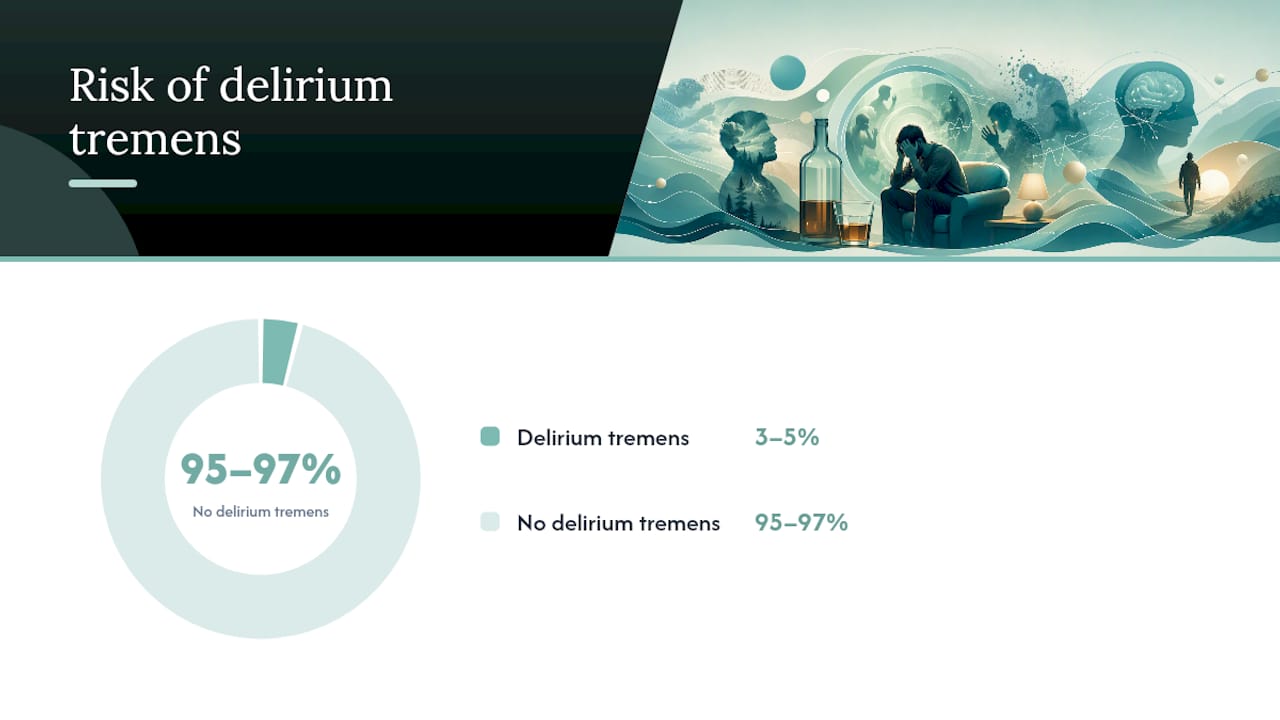
Delirium tremens occurs in roughly 3 to 5 percent of people going through alcohol withdrawal, but it carries a meaningfully higher mortality rate than the withdrawal syndrome overall when it isn’t treated. That gap between “uncommon” and “high stakes” is exactly why continuous monitoring exists for higher-risk patients. It’s not overcaution. It’s the difference between catching autonomic collapse early and finding out too late.
Medications and Supportive Care Used During Detox
Medical detox isn’t just supervision. It’s active treatment, and benzodiazepines are the backbone of it. Diazepam, lorazepam, and chlordiazepoxide are the standard options, dosed either on a fixed schedule or, more often now, adjusted in real time based on CIWA scores.
- First-line medication: Benzodiazepines control tremor, anxiety, and seizure risk, and doses are tapered down as symptoms ease.
- Backup options for tough cases: Phenobarbital is used in refractory withdrawal that isn’t responding well to benzodiazepines alone, and severe DTs may require ICU-level sedation.
- Adjunct medications: Short-term beta-blockers or clonidine can help settle residual adrenergic symptoms, like a racing heart or high blood pressure, without addressing the seizure risk directly.
- Supportive care: IV fluids, thiamine to prevent Wernicke’s encephalopathy, and correction of electrolyte imbalances are standard, alongside close monitoring of temperature and heart rhythm.
- Seizure management: Routine antiseizure drugs like phenytoin don’t actually prevent alcohol withdrawal seizures. Benzodiazepines do the real work here.
One detail worth knowing: antipsychotic medications are generally avoided early in treatment because they can lower the seizure threshold at exactly the point when seizure risk is highest.
Pro Tip: If a facility skips straight to sedating medication without ever mentioning a tapering plan, ask about it directly. A responsible detox program tapers benzodiazepine doses down over days, it doesn’t just medicate and stop.
Life After Detox: Why Symptoms Can Linger for Weeks
Detox handles the physical crisis. It doesn’t erase everything overnight. Post-acute withdrawal syndrome, or PAWS, can produce insomnia, mood swings, anxiety, low energy, and cravings that stretch on for weeks or, in some cases, months after the acute phase ends.
- Sleep problems and low-grade anxiety are the most commonly reported PAWS symptoms.
- Sleep hygiene routines, cognitive behavioral therapy, and, where appropriate, medication can meaningfully ease this stretch.
- People who move directly from detox into structured treatment tend to have better long-term outcomes than those who stop at detox alone.
- Worsening mood, new depressive symptoms, or cravings that intensify rather than fade deserve a follow-up conversation with a provider, not a shrug.
What Medically Supervised Detox Actually Looks Like
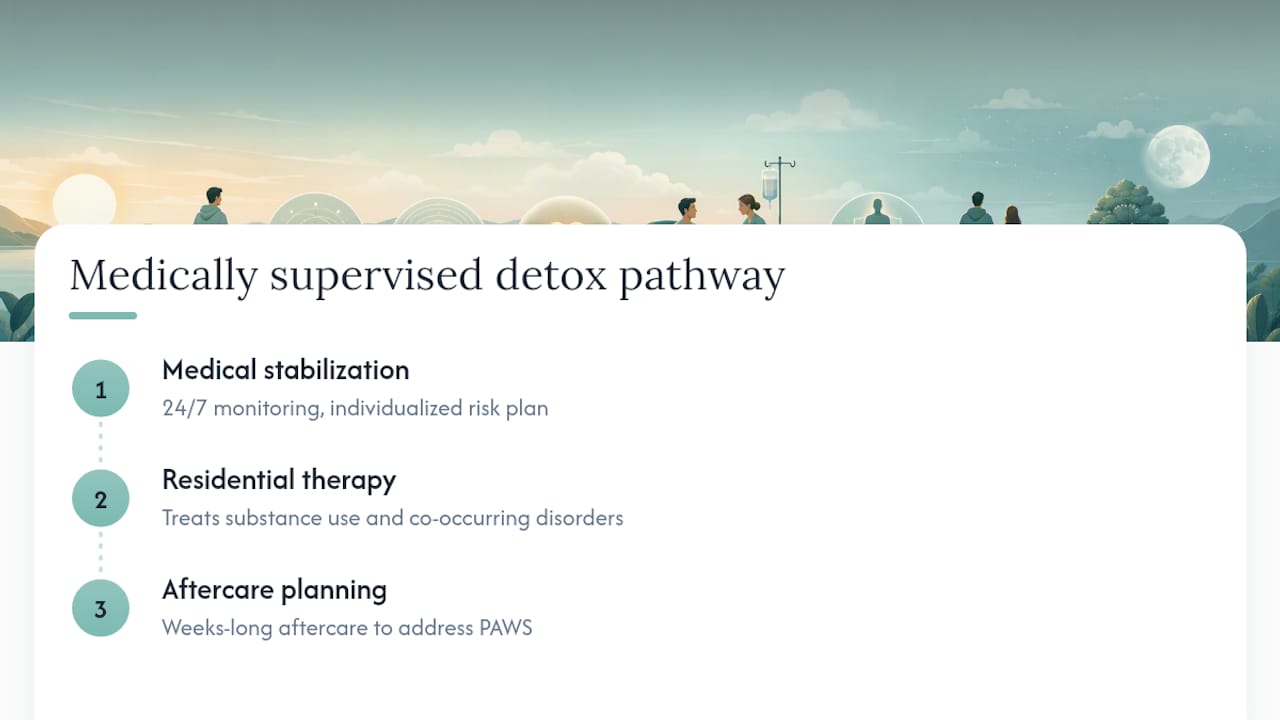
At Connected Recovery, detox happens under 24/7 medical supervision, with treatment plans built around each person’s specific risk profile rather than a one-size protocol. The 12-bed structure means fewer patients per clinician and faster response when a symptom crosses from “expected” to “concerning.”
The typical pathway runs from medical stabilization into residential therapy that addresses both substance use and any co-occurring mental health condition, then into aftercare planning built for the weeks after discharge, when PAWS symptoms are most likely to test someone’s footing.
A Clinical Note on Why Timing Matters
Speed to supervised care is the single biggest lever for someone with seizure history, prior DTs, or heavy long-term drinking. Monitoring doesn’t just catch problems, it prevents them from becoming emergencies. If a seizure happens, call 911 immediately; for everything short of that, reach out to a medical provider the same day rather than waiting to see how tomorrow goes.
— Jim
Getting Medically Supervised Detox Started
If you’ve read this far because someone you love, or you, are staring down that 6 to 12 hour window right now, you already know home detox is a gamble most people with real dependence shouldn’t take. Connected Recovery is built specifically for that gap between “needs more than willpower” and “doesn’t need a hospital ICU”: a 12-bed facility in Van Nuys with round-the-clock medical staff watching for exactly the red flags covered above.

The medical detox program is the right starting point for anyone with heavy or long-term drinking, a prior seizure or DTs, or co-occurring health conditions that make home withdrawal risky. From there, most clients move into residential treatment, and anyone managing a co-occurring mental health condition alongside alcohol use can get both addressed through dual diagnosis care rather than treated separately. Connected Recovery works with private pay and accepted insurance plans. Call the facility directly to talk through your situation and check what your coverage looks like before you decide anything.
This article is general information, not a substitute for advice from a qualified doctor. Consult a qualified healthcare professional about your own circumstances before acting on anything here.
Sources
- Alcohol Withdrawal Syndrome - StatPearls - NCBI Bookshelf
- Alcohol Toxicity and Withdrawal - MSD Manual Professional Edition
Recommended
DHCS Licensed · Joint Commission Accredited
If you or a loved one is struggling with substance use, our admissions team is available to verify your insurance benefits and help you begin recovery. All calls are confidential.