
Confidential Rehab Admission Process: Step-by-Step Guide

The confidential rehab admission process is a legally protected, multi-step procedure that moves from a private first phone call to active treatment, typically within a few days. Federal law, specifically HIPAA and 42 CFR Part 2, governs every stage, restricting who can see your records and under what conditions. Your information cannot be shared with your employer, family members, or any outside agency without your written consent. That protection starts the moment you make contact, not after you sign paperwork.
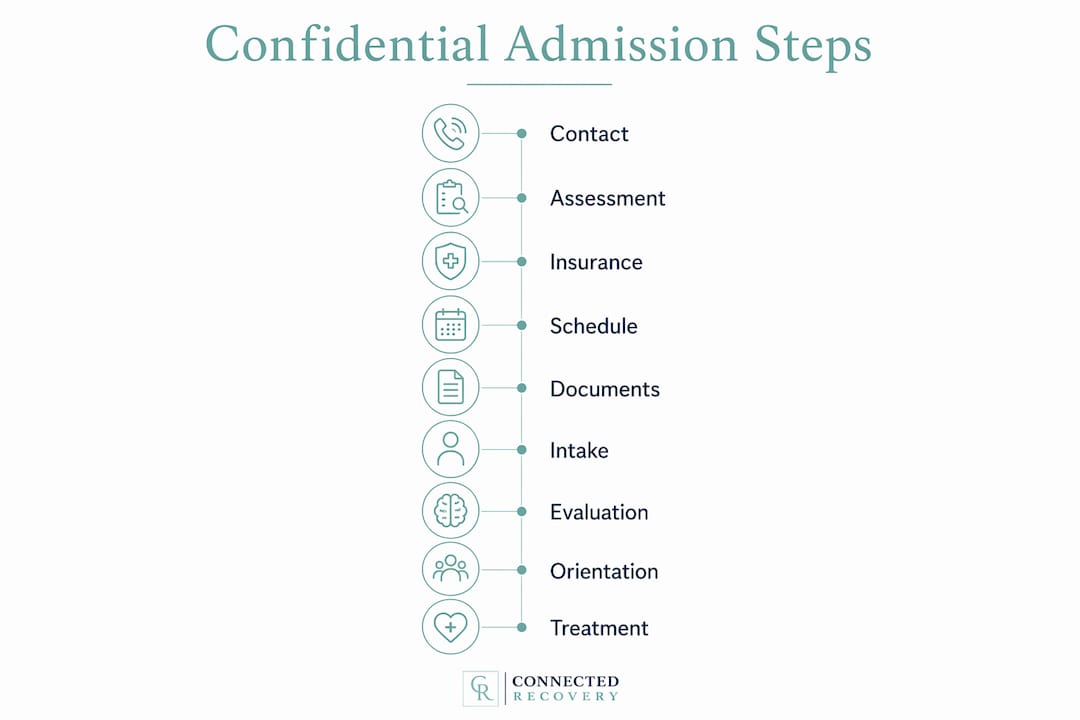
Here is what the process looks like from start to finish:
- Initial contact: A confidential phone call or secure online inquiry, non-binding and focused on gathering basic information about your situation.
- Pre-screening and clinical assessment: Evaluation of substance use history, mental health, and physical health to determine the right level of care.
- Insurance verification and payment review: Confidential check of your coverage, out-of-pocket costs, and alternative payment options.
- Admission scheduling: Coordinating your arrival date, transportation, and any detox needs.
- Arrival and intake: Paperwork, orientation, and an initial medical evaluation.
- Treatment begins: Programming, counseling, and stabilization within a confidential clinical environment.
The SAMHSA National Helpline operates 24/7 and can connect you to treatment options at no cost, with no obligation. It is a solid first call if you are not sure where to start.
How the confidential rehab admission process works, step by step
1. Make the first confidential contact
Your first call or secure message is non-binding. Admissions staff gather basic details: what substances are involved, how long use has been occurring, whether there are co-occurring mental health concerns, and what your living situation looks like. Nothing you share at this stage creates a legal record that goes anywhere without your consent. Most admissions complete within 24–48 hours of that first contact, with same-day placement available for urgent cases.

2. Complete the pre-screening and clinical assessment
After the initial call, a clinical professional conducts a more structured assessment. This covers substance use patterns, withdrawal risk, mental health history, and any medical conditions that affect care placement. The goal is matching you to the right level of care, whether that is medical detox, residential treatment, or an outpatient program. This assessment is conducted confidentially and does not go into any shared database without your authorization.
3. Verify insurance and review payment options
Admissions coordinators run a confidential benefits check against your private insurance, Medicaid, Medicare, or state-funded program. They will tell you what your plan covers, what your out-of-pocket responsibility looks like, and whether preauthorization is required. If you are uninsured or paying out of pocket, financial options include sliding-scale fees, payment plans, and financial assistance programs. Understanding your private insurance coverage before admission day removes a major source of stress.
4. Schedule your admission date
Once care level and payment are confirmed, you set an admission date. This conversation also covers logistics: transportation to the facility, whether you need a medical detox before residential treatment begins, and what to bring. Facilities like Connected Recovery, which operates a 12-bed residential program in Van Nuys, CA, keep this scheduling process private and handle it through secure channels.

5. Prepare documents and personal items
Bring a valid photo ID, your insurance card, a current list of medications with dosages, and any relevant medical records you have access to. Facilities typically have policies on phones, personal electronics, and clothing, so ask ahead of time. Knowing what to expect on arrival day reduces anxiety and keeps the focus on treatment.
6. Arrive, check in, and complete intake paperwork
Intake includes consent forms, privacy policy acknowledgments, and a review of your rights as a patient. Staff will go over facility rules, daily schedules, and who your primary counselor will be. The intake process is designed to be thorough without being overwhelming, and every document you sign reinforces the confidentiality protections already in place by law.
7. Undergo the initial medical evaluation
A physician or nurse practitioner reviews your physical health, current medications, and withdrawal risk. Medication reconciliation happens here: any prescriptions you take are reviewed, adjusted if necessary, and documented in your private clinical record. If you need medically supervised detox, that begins at this point under 24/7 clinical oversight.
8. Begin orientation and meet your treatment team
Orientation covers program structure, group schedules, therapy formats, and house rules. You will meet your counselor, case manager, and the clinical staff who will work with you throughout treatment. Connected Recovery’s admissions process is built around this relationship-first model, where small caseloads mean staff actually know your situation rather than reading from a chart.
9. Start active treatment
Programming typically begins within the first day or two after medical stabilization. For inpatients, this means a structured daily schedule of individual therapy, group sessions, and skills-building work. For those in residential treatment, the first week focuses on stabilization, trust-building, and establishing the therapeutic relationship that carries through the rest of the program.
What legal protections actually cover your privacy
Two federal laws govern confidentiality during rehab admission, and they work together. HIPAA limits how any health information, including rehab records, can be used or shared. A facility cannot release your records to your employer, a family member, or any outside party without your written authorization. That applies to billing records, clinical notes, and even the fact that you are a patient.
42 CFR Part 2 goes further. It applies specifically to substance use disorder treatment records and restricts disclosure even in situations where HIPAA might allow it. The only exceptions are genuine medical emergencies and valid court orders. This regulation exists because Congress recognized that fear of exposure is one of the primary reasons people avoid treatment.
Here is what these protections mean in practice:
- Your employer cannot be told you are in treatment, even if you use employer-sponsored insurance.
- Law enforcement cannot access your records without a court order that meets specific legal standards.
- Family members receive no information unless you sign a release authorizing it.
- Insurance billing is handled through secure, legally compliant channels that do not expose your diagnosis to unrelated parties.
- Consent forms at admission spell out exactly who can receive what information and under what conditions.
Pro Tip: Ask the admissions coordinator to walk you through the facility’s privacy policy before you arrive. Request a copy of the consent forms in advance so you can review what you are authorizing. You have the right to limit disclosures, and a reputable facility will welcome that conversation.
How insurance verification and payment stay confidential
Insurance verification is one of the stages where people worry most about privacy. The concern is understandable: your insurer receives a claim, and you wonder who else sees it. In practice, insurance billing for rehab is governed by the same HIPAA and 42 CFR Part 2 rules that cover your clinical records.
Admissions staff contact your insurer directly using secure, compliant systems. The information shared is limited to what is necessary to process the claim: diagnosis codes, treatment level, and dates of service. Your insurer is legally prohibited from sharing that information with your employer, even if your health plan is employer-sponsored, beyond what appears on an Explanation of Benefits statement. If that concerns you, ask the admissions team about self-pay options or whether the facility can bill in a way that limits what appears on your EOB.
- Private insurance: Verified confidentially; coverage details shared only with you and the billing department.
- Medicaid and Medicare: Federal programs with their own privacy protections layered on top of HIPAA.
- Self-pay: No insurance claim filed, which means no EOB sent to any plan administrator.
- Sliding-scale and payment plans: Available at many facilities for uninsured patients; financial discussions happen privately with admissions staff.
What to bring and how to prepare for admission day
Preparation reduces friction on arrival day and helps you focus on what matters. The documents you need are straightforward.
- Valid government-issued photo ID
- Insurance card (if applicable)
- Current medication list with dosages and prescribing physician contact
- Relevant medical records, particularly if you have a complex health history
- Emergency contact information
Beyond paperwork, mental preparation matters. You do not need to have everything figured out before you arrive. Knowing the schedule, understanding your rights, and having a clear picture of what the first few days look like removes a lot of the fear. Connected Recovery’s clinical team encourages prospective patients to ask every question they have before admission, including questions about what to ask detox facilities to make sure the fit is right.
Coordinate any work or family obligations before you go. If you need to arrange leave under the Family and Medical Leave Act, you can do so without disclosing the specific nature of your treatment to your employer. Your HR department needs medical certification, not a diagnosis.
How family and loved ones can be involved
Family involvement during treatment is possible, but it operates within clear boundaries set by you. Patients have the right to restrict or allow family access to their information and participation in their care. Nothing is shared with a spouse, parent, or friend without a signed release.
Most residential programs offer structured family therapy sessions, scheduled visitation, and defined communication windows. These are designed to support recovery without compromising the clinical environment. If you want family involved, the admissions team will walk you through the release process and explain what participation looks like. If you prefer privacy, that preference is documented and respected from day one.
Aftercare planning starts at admission, not discharge
Aftercare planning begins during the admission process, not at the end of treatment. The clinical team uses the information gathered at intake to start building a discharge plan that addresses your specific situation: outpatient step-down care, therapy referrals, support group connections, and relapse prevention strategies.
Confidentiality extends through this transition. Referrals to outpatient providers or therapists are made through secure, consent-based channels. Your records do not follow you to a new provider without your explicit authorization. Connected Recovery’s aftercare planning and relapse prevention programs are built into the treatment model from the first day, so the transition out of residential care is planned, not improvised.
Engaging with aftercare from the start of treatment, rather than treating it as an afterthought, is one of the clearest predictors of sustained recovery.
Ready to take the next step?
Connected Recovery’s 12-bed residential facility in Van Nuys, CA offers medical detox and residential treatment with 24/7 clinical supervision, individualized treatment plans, and a confidential admissions process built around your privacy. Every call is confidential, every question is welcome, and same-day admission is available for urgent situations. Reach out to the admissions team to start the conversation.
Key Takeaways
The confidential rehab admission process moves from a private first call to active treatment within a few days, protected at every stage by HIPAA and 42 CFR Part 2.
| Point | Details |
|---|---|
| Legal protections start immediately | HIPAA and 42 CFR Part 2 restrict disclosure of your records from the first contact forward. |
| Admission timeline is fast | Most admissions complete quickly, often within a few days, with same-day placement available for urgent cases. |
| Insurance verification stays private | Billing uses secure, compliant systems; employers cannot access your treatment information through your insurer. |
| Family involvement is your choice | You control what information family members receive by signing or withholding a release. |
| Aftercare planning begins at intake | Discharge planning starts during admission so the transition to ongoing care is structured, not reactive. |
Recommended
DHCS Licensed · Joint Commission Accredited
If you or a loved one is struggling with substance use, our admissions team is available to verify your insurance benefits and help you begin recovery. All calls are confidential.