
What Is a Safe Detox Environment: A Clear Guide

A safe detox environment is defined as a structured physical and emotional space that protects individuals from withdrawal complications while minimizing triggers that could derail recovery. Understanding what makes a detox setting genuinely safe goes well beyond clean sheets and locked cabinets. The American Society of Addiction Medicine (ASAM) Level 3.7 standard sets the clinical benchmark for medically monitored detox, requiring 24/7 nursing coverage and immediate physician access. Physical design, emotional support, and trigger reduction are equally non-negotiable. Whether you are preparing for detox at a facility or at home, knowing what a safe detox space looks like gives you the clearest possible starting point.
What is a safe detox environment by clinical standards?
A safe detox setting is defined first by the level of medical supervision it provides. The ASAM classifies withdrawal management into distinct intensity levels, and Level 3.7-WM represents the standard for freestanding, medically monitored detox facilities. This level requires round-the-clock nursing coverage with a physician available immediately, not just on call. That distinction matters because withdrawal from alcohol, benzodiazepines, and opioids can escalate into life-threatening events within hours.
Medically supervised detox differs fundamentally from social detox. Social detox relies on peer support and observation without medical intervention. Medically supervised detox includes continuous vital sign monitoring, medication protocols such as benzodiazepine tapers for alcohol withdrawal, and the ability to escalate care if a patient develops seizures or severe dehydration. The gap between these two settings is not a matter of comfort. It is a matter of survival for high-risk patients.
Medical detox makes withdrawal safer through continuous monitoring and active symptom management. That means a nurse assessing you every few hours, not just a check-in at shift change. Facilities operating at ASAM Level 3.7 also maintain protocols for co-occurring mental health crises, which is critical because anxiety, depression, and psychosis frequently surface during withdrawal.
- 24/7 nursing coverage with documented vital sign checks at regular intervals
- Immediate physician access for medication adjustments and emergency response
- Standardized withdrawal scales such as the Clinical Institute Withdrawal Assessment (CIWA) for alcohol
- Medication-assisted protocols to reduce seizure risk and manage pain
- Mental health screening integrated from day one
Pro Tip: Ask any facility what their physician response time is during an after-hours emergency. A safe detox setting answers that question in minutes, not hours.
How does the physical environment affect detox safety?
The physical space where detox happens shapes patient outcomes in ways most people underestimate. Low-friction physical environments minimize nonessential sensory inputs, which directly reduces agitation and prevents treatment dropout during the most critical early withdrawal stages. A flickering fluorescent light or a chaotic common room is not just annoying. For someone in acute withdrawal, it can tip the nervous system into overdrive.

The best detox environment practices center on removing anything that raises the sensory or emotional temperature of the space. Substance-related triggers, including paraphernalia, alcohol in the refrigerator, and even certain music or television content, must be eliminated. Hazardous objects, from sharp items to unsecured medications, need to be secured before a patient arrives. These are not optional precautions.
Sensory controls like adjustable lighting, temperature regulation, and clutter-free spaces contribute significantly to patient stability. Dimmable lights allow patients to reduce stimulation during headaches or photosensitivity, which are common during opioid and alcohol withdrawal. Comfortable bedding and a consistent room temperature support sleep, and sleep quality during detox directly affects how quickly the nervous system begins to stabilize.
- Remove all substances and paraphernalia from the immediate environment before detox begins
- Control lighting with dimmable fixtures or blackout curtains for sleep support
- Regulate temperature to accommodate sweating and chills common in withdrawal
- Reduce clutter to lower visual noise and create a sense of calm
- Limit screen time and loud media to prevent overstimulation
Pro Tip: Scent matters more than most people realize. Cleaning products with strong chemical odors can trigger nausea during withdrawal. Switch to unscented products in any detox space.
Why does emotional safety matter as much as medical care?
Emotional safety is the most underestimated component of a safe detox space. Trusted support figures, whether family members, peer specialists, or counselors, ground patients during peak withdrawal symptoms when cognitive function and emotional regulation are at their lowest. A person in withdrawal is not simply uncomfortable. They are often terrified, disoriented, and convinced the discomfort will never end.
Reducing overstimulation and supporting predictable routines improves nervous system recovery during detox. The brain in withdrawal is hyperreactive. Unpredictable schedules, loud arguments, or unexpected visitors can spike cortisol and adrenaline at exactly the moment the body needs to calm down. Structure is not rigidity. It is medicine.
Peer specialists bring a specific kind of credibility that clinical staff cannot fully replicate. Someone who has been through withdrawal themselves can say, with authority, “This passes.” That statement from a peer lands differently than the same words from a physician. Both matter. Neither replaces the other.
Here are the key emotional safety practices that define a genuinely supportive detox environment:
- Limit contact with triggering individuals. People who use substances or who create conflict should not have access to someone in detox, even with good intentions.
- Establish a predictable daily schedule. Meals, medication times, and rest periods at consistent hours reduce anxiety and help the body regulate.
- Assign a primary support contact. One trusted person, whether a family member or peer specialist, should serve as the emotional anchor during the process.
- Set clear communication expectations. Patients should know who to call, when, and for what. Ambiguity during withdrawal creates unnecessary fear.
- Validate the experience without minimizing it. Telling someone to “push through” is not support. Acknowledging that withdrawal is genuinely hard, while reinforcing that it is temporary, is.
What are best practices for creating a safe detox environment at home?
Home detox carries real risk, and preparedness and support are the two factors that most determine whether it goes safely. The first step is an honest assessment of withdrawal severity. Alcohol and benzodiazepine withdrawal can cause seizures and death without medical intervention. Opioid withdrawal is rarely fatal but is intensely uncomfortable and carries high relapse risk. Anyone withdrawing from alcohol or benzodiazepines should consult a physician before attempting home detox.
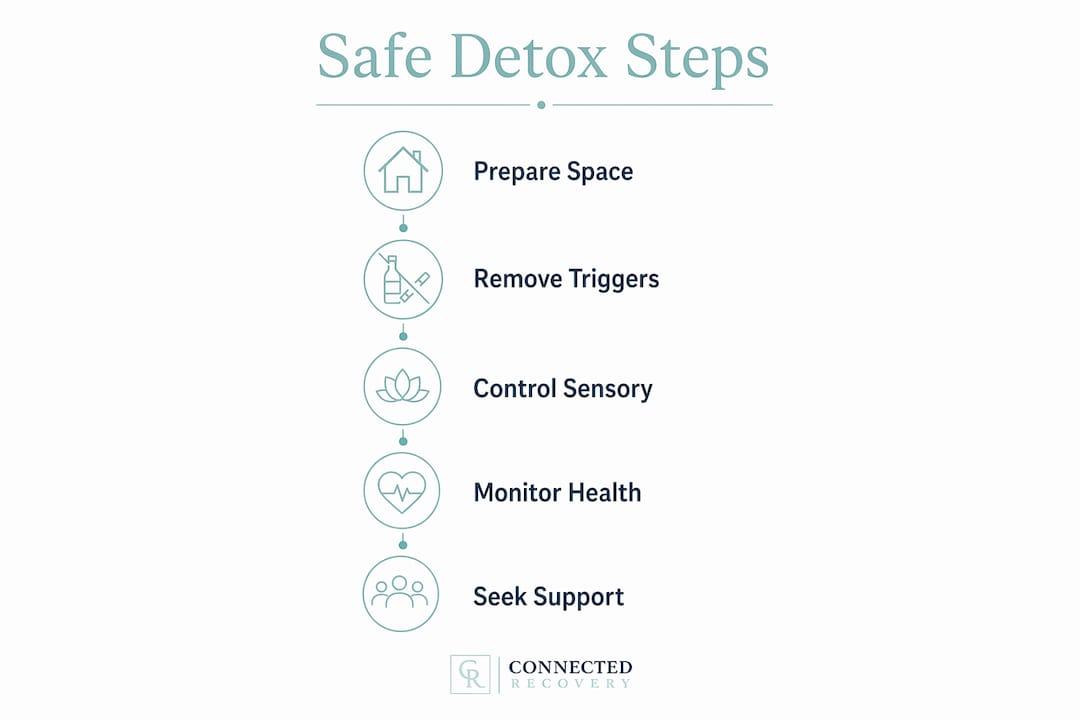
For substances where home detox is medically appropriate, the environment requires deliberate preparation. Improving air quality and reducing chemical exposures are practical steps that lower the body’s overall toxic load and support natural recovery. Open windows when weather permits, remove aerosol sprays and harsh cleaning agents, and keep the space as clean and simple as possible.
Creating calm spaces with controlled sensory input amplifies the body’s natural detox processes and reduces relapse risk. A dedicated rest area, separate from the main living space if possible, signals to the brain that this is a recovery zone.
| Checklist item | Why it matters |
|---|---|
| Remove all substances and paraphernalia | Eliminates the most direct relapse trigger in the environment |
| Secure medications and sharp objects | Protects against impulsive decisions during emotional volatility |
| Improve air quality and reduce chemical odors | Lowers sensory load and supports respiratory comfort |
| Establish a calm, dedicated rest space | Gives the nervous system a consistent signal to downregulate |
| Have a medical contact plan ready | Ensures rapid response if withdrawal symptoms escalate unexpectedly |
Warning signs that require immediate professional help include seizures, hallucinations, severe confusion, chest pain, and inability to keep fluids down. These are not signs to “wait and see.” They are reasons to call 911 or go directly to an emergency room.
Key Takeaways
A safe detox environment requires clinical supervision, a low-stimulation physical space, and consistent emotional support to protect patients through the full arc of withdrawal.
| Point | Details |
|---|---|
| ASAM Level 3.7 is the clinical benchmark | This standard requires 24/7 nursing and immediate physician access for medically monitored detox. |
| Physical design directly affects outcomes | Low-friction spaces with controlled lighting, temperature, and minimal clutter reduce agitation and dropout. |
| Emotional safety is not optional | Trusted support figures and predictable routines stabilize the nervous system during peak withdrawal. |
| Home detox requires deliberate preparation | Remove substances, secure hazards, improve air quality, and have a medical escalation plan ready. |
| Know when to seek professional care | Seizures, hallucinations, and severe confusion during withdrawal require immediate emergency intervention. |
What I’ve learned about detox environments after years in this field
The clinical checklist for a safe detox setting is well established. What surprises people, including many clinicians, is how much the non-medical factors determine whether someone actually completes detox. I have seen patients with excellent medical care abandon treatment because the environment felt chaotic, cold, or impersonal. I have also seen patients in modest settings succeed because they felt genuinely seen and supported.
The physical environment is not decoration. A room that feels safe, quiet, and predictable tells the nervous system something the best medication cannot fully replicate: that this is a place where healing is possible. Patients in acute withdrawal are extraordinarily sensitive to their surroundings. A slammed door, a harsh overhead light, or an overheard argument can undo an hour of careful symptom management.
What I find most underappreciated is the role of human connection in detox success. Medical care keeps people alive. Emotional safety keeps them engaged long enough for the medical care to work. The two are not competing priorities. They are the same priority expressed in different forms. Facilities that treat them as separate concerns tend to see higher dropout rates in the first 72 hours, which is exactly when withdrawal is most dangerous.
The best detox environments I have encountered share one quality: they are built around the patient’s nervous system, not around operational convenience. That means flexible lighting, quiet hours, staff who knock before entering, and a culture where distress is met with presence rather than protocol. These details are not luxuries. They are the difference between a patient who stays and one who leaves against medical advice.
— Jim
How Connected Recovery approaches safe detox
Connected Recovery operates a 12-bed facility in Van Nuys, CA, built specifically around the principles that define a genuinely safe detox setting. The small census is intentional. With 12 patients, the clinical team can provide the kind of individualized attention that larger facilities structurally cannot. Every patient receives a tailored treatment plan, 24/7 medical supervision, and access to integrated mental health support for co-occurring disorders.
The medical detox program at Connected Recovery combines ASAM-aligned clinical protocols with an environment designed to reduce sensory stress and support emotional stability. Care does not stop at detox. Connected Recovery builds aftercare planning into the process from day one, so patients leave with a clear path forward rather than a discharge summary and a phone number. If you are researching what a safe detox setting looks like in practice, Connected Recovery is worth a direct conversation.
FAQ
What is a safe detox environment?
A safe detox environment is a structured space that provides medical supervision, minimized substance-related triggers, and emotional support to protect individuals through withdrawal. The ASAM Level 3.7 standard defines the clinical minimum for medically monitored detox facilities.
What are the signs of a safe detox space?
Signs of a safe detox space include 24/7 nursing coverage, immediate physician access, controlled sensory conditions such as adjustable lighting and temperature, and the presence of trained emotional support staff or peer specialists.
Is home detox ever safe?
Home detox is appropriate only for lower-risk substances and only with a clear medical escalation plan in place. Alcohol and benzodiazepine withdrawal require medical supervision because both carry seizure risk that can be fatal without intervention.
What is the difference between medical detox and social detox?
Medical detox includes continuous vital sign monitoring, medication protocols, and physician oversight. Social detox relies on peer support and observation without medical intervention, making it unsuitable for high-severity withdrawal cases.
How does the physical environment affect detox outcomes?
Low-friction physical environments reduce agitation and prevent early treatment dropout by minimizing sensory overload. Adjustable lighting, temperature control, and clutter-free spaces directly support nervous system stabilization during withdrawal.
Recommended
DHCS Licensed · Joint Commission Accredited
If you or a loved one is struggling with substance use, our admissions team is available to verify your insurance benefits and help you begin recovery. All calls are confidential.