
Blog
Clinical Handoff: How PHP Covers the First 90 Days After Inpatient Rehab
Clinical Handoff: How PHP Covers the First 90 Days After Inpatient Rehab

Yes, for many people leaving inpatient rehab, a Partial Hospitalization Program is the right next step when they’re medically stable but still need daily clinical structure and lack a fully safe, independent routine. PHP gives you several hours of intensive therapy a day while you sleep at home or in sober housing at night. Clinicians use ASAM criteria to confirm this level of care fits, and it keeps clinical continuity intact instead of cutting you loose too fast.
TL;DR:
- PHP is suitable for individuals who are medically stable, have safe housing, and require daily clinical contact without needing 24-hour supervision.
- It generally lasts a few weeks with costs lower than inpatient care, requiring prior authorization from insurance providers.
- The program helps prevent relapse by practicing coping skills, managing medications, and addressing co-occurring mental health conditions.
- Red flags for needing more intensive care include active suicidal ideation, unmanaged withdrawal, and lack of a safe place at night.
- Choosing a quality PHP involves verifying licensing, integrated treatment options, staff-to-patient ratios, and clear discharge planning.
Table of Contents
- What a Partial Hospitalization Program (PHP) actually is
- PHP versus IOP and inpatient care: what actually changes
- Who is PHP right for: eligibility and red flags
- A typical day in PHP and what it includes
- Duration, costs, and insurance: what to expect
- How PHP bridges the gap after inpatient rehab
- Choosing a PHP program: what to check before you enroll
- Connected Recovery’s approach to step-down care
- A note from the author
- Sources
What a Partial Hospitalization Program (PHP) actually is
A Partial Hospitalization Program typically runs several days a week, with multiple hours of structured treatment per day. You go home (or to sober living) at night, which is what separates it from residential care. The clinical goals are specific:
- Prevent relapse by rehearsing coping skills under real supervision, not just theory
- Practice handling daily triggers while a treatment team is still watching closely
- Manage medications, including any medication-assisted treatment, with a psychiatric provider checking in regularly
Within ASAM’s levels of care, PHP sits between residential treatment and intensive outpatient programming. It’s built for people who no longer need round-the-clock supervision but would struggle without daily contact.
PHP versus IOP and inpatient care: what actually changes
The biggest shifts between levels of care are hours, oversight, and where you sleep. Inpatient rehab means 24-hour supervision inside a facility. PHP drops that overnight requirement but keeps daily contact intense. IOP loosens things further:
- Inpatient/residential: round-the-clock medical and clinical staff, no independent time
- PHP: three to six hours a day, five to seven days a week, home or sober living at night
- IOP: typically nine to fifteen hours a week total, spread over fewer days, built for people already managing most of daily life
Clinicians usually recommend PHP over IOP when someone still needs daily eyes on their mood, medication response, or cravings. They recommend PHP over continued residential care once housing is stable and the person can tolerate short exposure to community triggers without falling apart.
Who is PHP right for: eligibility and red flags
PHP works for a specific window of readiness. It’s not the right fit for everyone leaving inpatient care, and it’s worth being honest about where you actually stand.
- You’re medically stable. Withdrawal is managed, vitals are steady, and you don’t need 24-hour medical monitoring anymore.
- You have safe housing. A sober living environment or a supportive home without active substance use nearby is close to a requirement, not a nice extra.
- You still need daily clinical contact. If weekly therapy alone feels too thin, PHP fills that gap.
- You have a co-occurring mental health condition. Depression, PTSD, or anxiety alongside substance use calls for integrated psychiatric care, something NIMH points to as common rather than rare.
Red flags that mean you likely need more than PHP: active suicidal ideation, unmanaged acute withdrawal, or no safe place to go at night. Those situations call for continued residential or inpatient care first.
A typical day in PHP and what it includes
Most PHP days start mid-morning and run into the afternoon, structured tightly enough to feel like a job you’re showing up for. A common schedule includes a morning check-in and med management, group therapy, a break, individual counseling, skills-based group work, and case management before you head home.
The therapies themselves are the same evidence-based tools used in residential care, just compressed into a shorter daily window:
- Cognitive behavioral therapy (CBT) for reshaping thought patterns tied to use
- Dialectical behavior therapy (DBT) for emotional regulation and distress tolerance
- Motivational interviewing to strengthen your own reasons for staying the course
- Medication-assisted treatment (MAT) with psychiatric oversight, when clinically indicated
- Family therapy sessions, since home dynamics often shape relapse risk
Pro Tip: Before intake, write down every current medication, dosage, and prescriber name, along with any treatment preferences (specific therapy styles, past medications that didn’t work). Handing this over on day one speeds up your care plan and avoids gaps in your MAT continuity.
Duration, costs, and insurance: what to expect
PHP stays usually run a few weeks, though the exact length depends on clinical progress, not a fixed calendar.
Cost runs well below inpatient rates since there’s no overnight staffing or room and board, though it’s still a meaningful daily expense. A few things to have ready before you call anyone:
- Your insurance card and policy number, since most plans require proof of medical necessity and prior authorization before covering PHP
- A list of your current diagnoses and recent treatment history
- Questions about copays and how many PHP days your plan typically approves
If you’re uninsured or unsure where to start, the SAMHSA national helpline can point you toward coverage options and local programs.
How PHP bridges the gap after inpatient rehab
PHP exists because the leap from 24-hour supervision straight into ordinary life is too big for most people. Peer-reviewed research on continuing care backs this up: structured step-downs that maintain clinical contact reduce relapse risk compared to abrupt discharge. Here’s how that transition typically gets managed:
- Clinical handoff. Your inpatient team transfers notes, medication plans, and progress summaries to the PHP team so nothing gets repeated or missed.
- Family involvement. Many programs loop in family early, since home environment often determines whether the step-down holds.
- Step-down criteria. Once you’re managing triggers, attending consistently, and psychiatrically stable, the team starts planning your move to IOP, standard outpatient care, or continued sober living.
- What happens if progress stalls. If cravings intensify or attendance slips, most programs extend PHP rather than pushing a premature step-down. That’s a normal adjustment, not a failure.
The first 90 days after residential discharge carry the highest relapse risk, which is exactly the window PHP is designed to cover.
Choosing a PHP program: what to check before you enroll
Not every program delivers the same quality of care, and the differences matter more than glossy marketing suggests. Look for these markers before committing:
- State licensing and accreditation, confirmed directly with the facility, not just claimed on a website
- Integrated dual-diagnosis treatment, so psychiatric care and addiction treatment happen under one coordinated plan
- MAT availability if you’re on or considering medication support
- Staff-to-patient ratio, since smaller caseloads generally mean more individualized attention
- A documented discharge plan, not a vague promise to “figure it out later”
Ask admissions directly: What’s the daily schedule? How do you handle medication changes? Who coordinates my aftercare, and what does that handoff look like? How do you track outcomes after people leave?
Pro Tip: If a program can’t clearly explain who supervises medical care on-site and how often a psychiatrist is present, treat that as a warning sign, not a minor gap.
Connected Recovery’s approach to step-down care
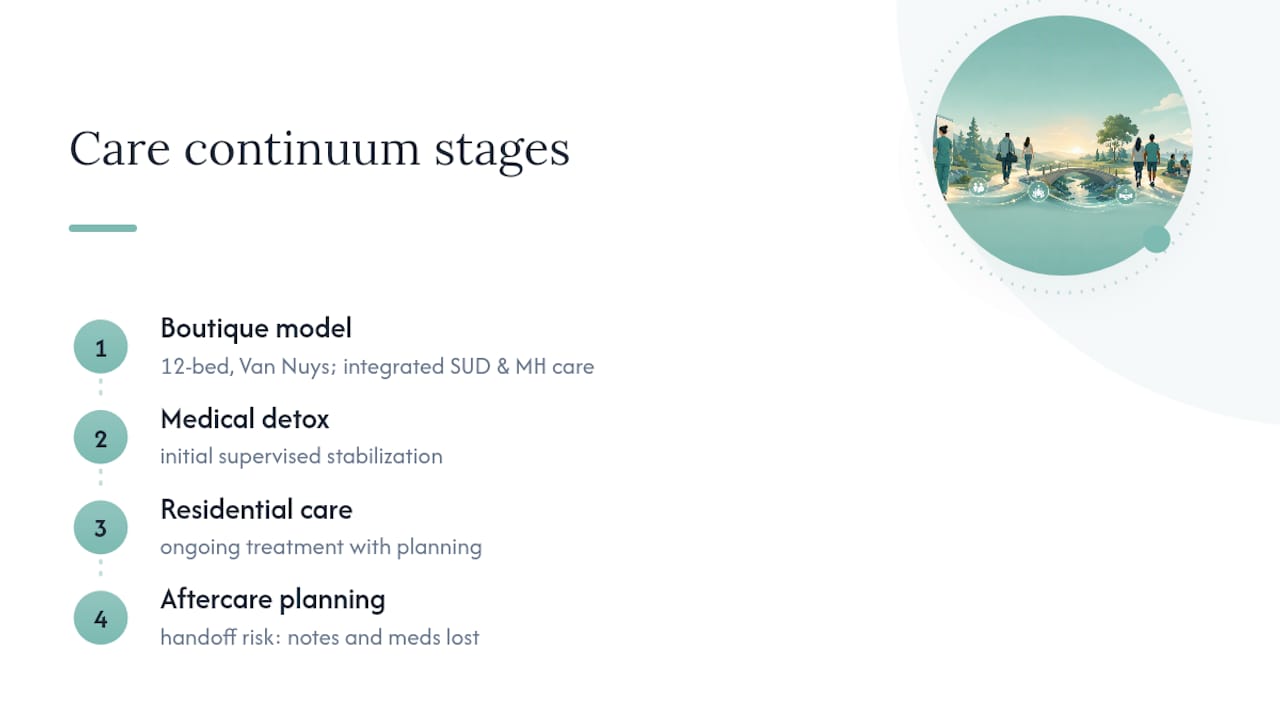
Connected Recovery Inc. operates a 12-bed boutique model in Van Nuys built around integrated care for co-occurring substance use and mental health conditions. That smaller footprint means 24/7 medical supervision and tailored planning aren’t stretched across dozens of beds. The continuum runs from medical detox through residential care into aftercare planning, which matters most exactly at the handoff points where clinical notes and medication plans tend to get lost between providers.
A note from the author
If you’re weighing PHP after rehab, trust the pattern: daily structure without losing your own bed at night tends to hold better than either extreme. If you’re evaluating options, Connected Recovery’s dual-diagnosis program is worth a call.
— Jim
This article is general information, not a substitute for advice from a qualified doctor. Consult a qualified healthcare professional about your own circumstances before acting on anything here.
Sources
- SAMHSA national helpline
- About the ASAM criteria
- Continuing care in substance use treatment (PMC article)
- NIMH substance use and mental health
- GoodRx: partial hospitalization program overview
Recommended
DHCS Licensed · Joint Commission Accredited
If you or a loved one is struggling with substance use, our admissions team is available to verify your insurance benefits and help you begin recovery. All calls are confidential.