
The Role of Hydration During Detox: 2026 Guide

Hydration is the transport mechanism your body depends on to move toxins out through the liver, kidneys, and lymphatic system. Without steady fluid intake, even a well-functioning detox pathway slows down. The role of hydration during detox goes beyond simply drinking water. It means giving your organs the fluid they need to filter blood, produce bile, and flush waste before it recirculates. This guide breaks down exactly how water and electrolytes work together to support detoxification, what mistakes to avoid, and which habits actually make a difference.
How does hydration support the liver and kidneys in detox?
The liver and kidneys are your body’s primary detox organs, and both depend on consistent fluid intake to do their jobs. The liver transforms fat-soluble toxins into water-soluble compounds so they can be excreted. That conversion process requires water to produce bile and drive the metabolic reactions involved. Without enough fluid, bile becomes thick and slow, and toxins that should be eliminated get reabsorbed into circulation instead.

The kidneys filter roughly 200 liters of blood per day, pulling out waste and excreting it through urine. That filtration only works efficiently when you are consistently hydrated. Fluids move waste products via bile and the kidneys, and inadequate hydration impairs toxin clearance even when the organs themselves are healthy.
Dehydration creates a compounding problem. Sluggish bile flow and slow intestinal transit during detox make steady water intake critical to prevent toxin reabsorption. The lymphatic system faces the same challenge. Unlike the cardiovascular system, the lymphatic system has no pump. It relies on hydration, movement, and breathing to keep fluid moving. Poor hydration thickens lymph, reducing the system’s ability to carry waste away from tissues.
- Liver function requires water to produce bile and complete metabolic detox reactions
- Kidney filtration depends on consistent hydration to excrete water-soluble toxins
- Lymph fluid stagnates when you are dehydrated, slowing whole-body toxin removal
- Dehydration causes toxin byproducts to recirculate rather than be expelled
Pro Tip: Check your urine color as a quick hydration gauge. Pale yellow signals adequate hydration. Dark amber means your kidneys are working with too little fluid, and toxin clearance is already compromised.
Why is electrolyte balance as important as water intake?
Water alone does not guarantee your cells are actually hydrated. Electrolytes such as sodium, potassium, magnesium, and calcium regulate fluid movement across cell membranes, controlling how water enters and exits each cell. Without the right mineral balance, water you drink may pass through your system without reaching the cells that need it most.
This distinction matters enormously during detox. Cellular hydration is where the real work happens. If electrolytes are out of balance, you can drink large amounts of water and still experience symptoms of dehydration at the cellular level, including fatigue, brain fog, and muscle cramps. Electrolyte imbalances impede water distribution in cells, causing inefficient detox and worsening withdrawal symptoms.
Here is a practical breakdown of the four key electrolytes and their roles:
- Sodium regulates total fluid volume and drives water into cells through osmosis. Low sodium is the most dangerous electrolyte deficit during detox.
- Potassium balances sodium inside and outside cells, supporting nerve and muscle function. Alcohol withdrawal depletes potassium rapidly.
- Magnesium supports over 300 enzymatic reactions, including those involved in liver detox pathways. Deficiency is common in people withdrawing from alcohol or stimulants.
- Calcium works alongside magnesium to regulate cell membrane permeability and fluid transport.
Inefficient cellular hydration from electrolyte imbalance can cause excessive urination without proper intracellular rehydration, which worsens withdrawal symptoms such as fatigue and confusion. Drinking electrolyte-rich fluids, not just plain water, addresses this directly.
Pro Tip: Coconut water, diluted sports drinks without artificial sweeteners, or a pinch of sea salt in your water glass are practical ways to restore electrolyte balance without supplements.
What are the most common hydration mistakes during detox?
The biggest hydration mistake during detox is treating water like a flush. Drinking large volumes of water in short bursts does not accelerate detox. It dilutes your electrolytes and can cause hyponatremia, a condition where sodium levels drop dangerously low. Excessive water intake without electrolyte balance can cause seizures and disrupt detox processes entirely. That is not a theoretical risk. It has happened to people following aggressive detox regimens.
Timing is the second major mistake. Liver enzyme activity and renal clearance fluctuate daily, meaning your body processes toxins more efficiently during daylight hours. Drinking most of your water late at night disrupts sleep and misaligns with your body’s natural detox cycle. Spacing intake across the day, starting with a glass of water upon waking, works with your biology rather than against it.
- Binge drinking water in large volumes at once dilutes sodium and impairs cellular hydration
- Skipping electrolytes while increasing water intake creates an imbalance that worsens symptoms
- Late-night overloading disrupts sleep and misaligns with peak liver and kidney activity
- Relying on diuretic beverages like coffee or alcohol to “flush” the system accelerates dehydration
- Ignoring thirst cues during detox, especially when nausea is present, leads to cumulative fluid deficit
The liver and kidneys perform detoxification effectively with consistent, moderate daily hydration. No special flush or extreme cleanse improves on that. Consistency beats intensity every time.
Practical hydration strategies to support detox and recovery
Effective detox hydration strategies center on consistency, timing, and food sources, not volume alone. Your daily water target depends on your body weight and activity level. A common clinical guideline is to drink roughly half your body weight in ounces per day, adjusted upward if you are sweating heavily or experiencing diarrhea during withdrawal.
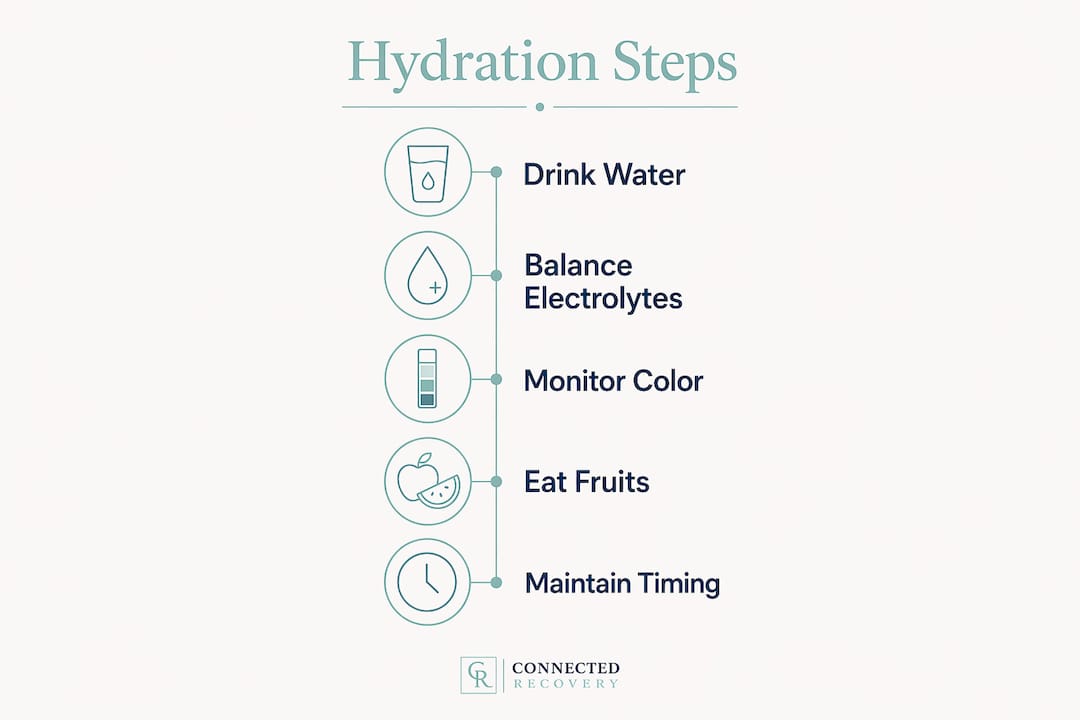
Combining water intake with hydrating fruits and vegetables improves fluid and nutrient availability for detox processes. Foods like cucumbers, watermelon, celery, and leafy greens deliver water alongside vitamins and minerals your detox organs need. This is a more efficient delivery method than water alone because the nutrients arrive packaged with the fluid.
| Hydration source | Key benefit | Best timing |
|---|---|---|
| Plain water | Core fluid volume for kidney filtration | Morning and throughout the day |
| Coconut water | Natural electrolytes, especially potassium | After sweating or physical activity |
| Herbal teas (non-caffeinated) | Hydration plus antioxidant support | Afternoon and evening |
| Hydrating foods (cucumber, watermelon) | Fluid plus vitamins and minerals together | Meals and snacks |
| Diluted electrolyte drinks | Sodium and magnesium replenishment | During active withdrawal symptoms |
Medical guidelines recommend pairing steady water intake with 7–9 hours of sleep and 30 minutes of moderate physical activity to support the body’s natural detox capacity. Hydration works best as part of that broader foundation, not as a standalone fix. Tracking progress during detox, including fluid intake, helps you spot patterns and adjust before deficits compound. You can learn more about monitoring detox recovery to build that habit into your routine.
Key Takeaways
Consistent, electrolyte-balanced hydration is the single most effective daily action you can take to support your liver, kidneys, and lymphatic system during detox.
| Point | Details |
|---|---|
| Hydration is a transport mechanism | Without adequate fluids, toxin byproducts recirculate instead of being expelled. |
| Electrolytes are non-negotiable | Sodium, potassium, magnesium, and calcium control how water actually enters your cells. |
| Timing matters as much as volume | Drinking water during daylight hours aligns with peak liver enzyme and kidney activity. |
| Binge flushing causes harm | Excessive water without electrolytes can cause hyponatremia and worsen withdrawal symptoms. |
| Food is a hydration source | Cucumbers, watermelon, and leafy greens deliver fluid and minerals together for better absorption. |
What I’ve learned about hydration that most detox advice gets wrong
Most detox content focuses on how much water to drink. That framing misses the point. After working with people through detox and withdrawal, the pattern I see most often is not dehydration from too little water. It is cellular dehydration from the wrong kind of hydration. Someone drinks two liters of plain water a day and still feels exhausted, foggy, and cramped because their electrolytes are depleted and the water is not reaching their cells.
The second thing most advice ignores is timing. Your liver does not work at a flat rate around the clock. Detox efficiency peaks during daylight hours when liver enzymes and renal clearance are most active. Drinking a glass of water first thing in the morning is genuinely one of the most useful habits you can build, not because of any mystical reason, but because it primes your kidneys right as their activity ramps up.
What I tell people is to think of hydration as infrastructure, not intervention. You cannot drink your way out of a bad detox day after the fact. But you can build a daily pattern of spaced, electrolyte-aware fluid intake that keeps your detox organs running at capacity. Sleep, movement, and diet all amplify that foundation. None of them replace it. The people who do best in detox are the ones who treat hydration as a non-negotiable daily structure, not a response to feeling bad.
If you are going through a medically supervised detox, ask your care team specifically about electrolyte monitoring. That one conversation can prevent a week of unnecessary fatigue and confusion. Understanding what to expect from withdrawal symptoms also helps you recognize when hydration is the issue versus when something else needs attention.
— Jim
Connected Recovery’s approach to hydration in medical detox
Hydration monitoring is a clinical function, not just a wellness tip. During active detox, fluid and electrolyte levels can shift rapidly, especially in alcohol or stimulant withdrawal, and those shifts carry real medical risk.
Connected Recovery’s medical detox program in Van Nuys, CA includes 24/7 medical supervision with attention to fluid balance, nutritional support, and individualized care across a 12-bed facility. That small capacity means your hydration status, withdrawal symptoms, and recovery progress get real attention, not a standardized protocol applied to a room of 30 people. If you are ready to detox in a setting where the clinical details actually get managed, Connected Recovery is built for exactly that.
FAQ
What is the role of hydration during detox?
Hydration acts as a transport mechanism that moves toxins out of the body through the liver, kidneys, and lymphatic system. Without consistent fluid intake, waste products slow down or recirculate rather than being excreted.
How much water should you drink during detox?
A practical starting point is half your body weight in ounces per day, adjusted for activity level and any fluid loss from sweating or diarrhea. Plain water should be paired with electrolyte sources to support cellular hydration.
Can you drink too much water during detox?
Yes. Drinking excessive water without adequate electrolytes dilutes sodium and can cause hyponatremia, which leads to symptoms including confusion, nausea, and in severe cases, seizures. Consistent, spaced intake is safer than large-volume flushing.
Why do electrolytes matter for detoxification?
Electrolytes like sodium, potassium, magnesium, and calcium control how water moves across cell membranes. Without them in balance, water does not reach the cells where detox reactions actually occur, and withdrawal symptoms worsen.
What are the best drinks for detox support?
Plain water, coconut water, non-caffeinated herbal teas, and diluted electrolyte drinks all support detox effectively. Caffeinated and alcoholic beverages are diuretics and accelerate fluid loss rather than supporting elimination.
Recommended
DHCS Licensed · Joint Commission Accredited
If you or a loved one is struggling with substance use, our admissions team is available to verify your insurance benefits and help you begin recovery. All calls are confidential.